

What Does Anxiety at Night Feel Like?
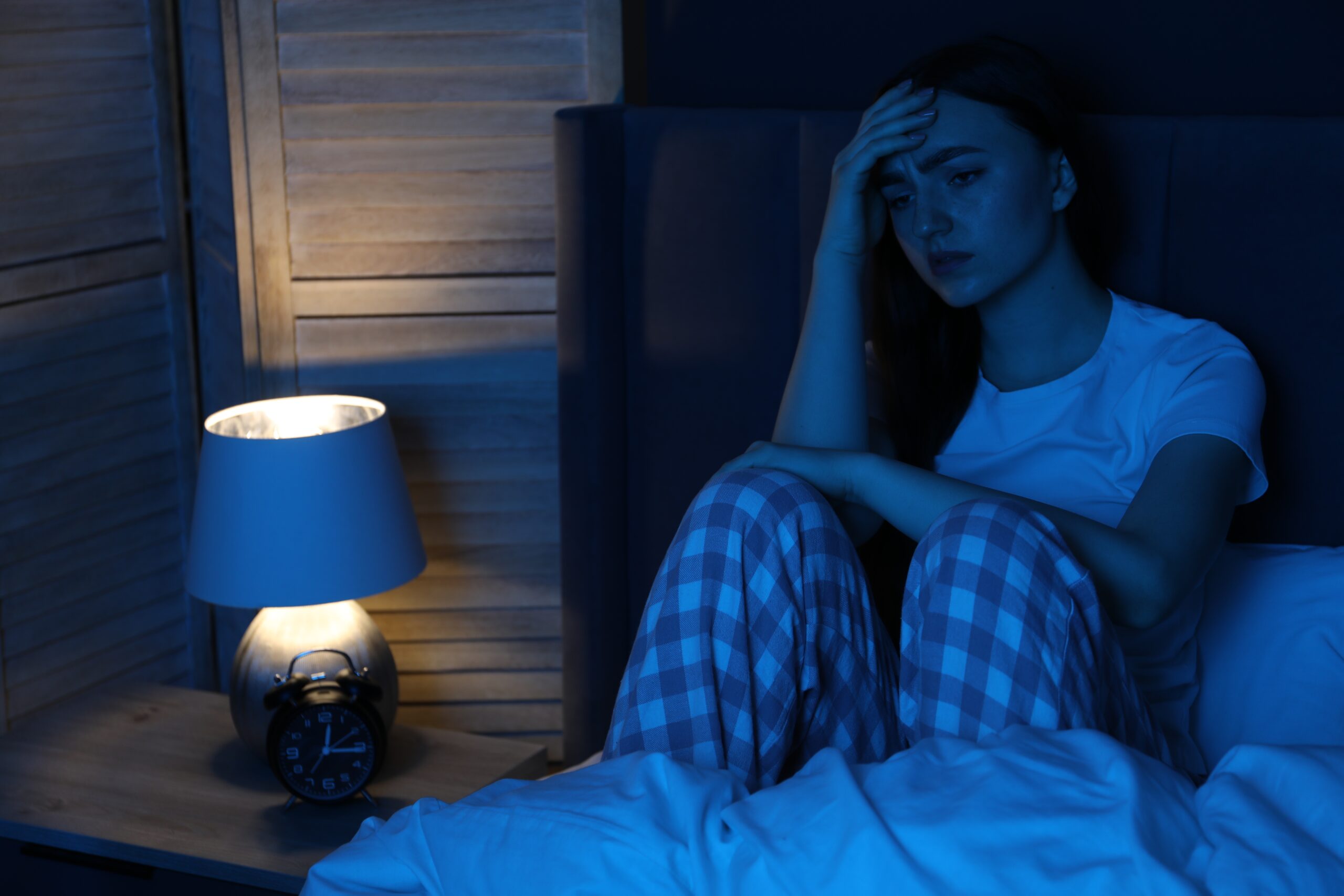
Anxiety at night may involve worry, restlessness, muscle tension, a sense of dread, or difficulty allowing the day to feel finished. Some people feel relatively capable while they are busy, only to notice their thoughts accelerating once they get into bed.
This experience is not a diagnosis by itself, and occasional nighttime worry does not necessarily indicate an anxiety disorder. The pattern becomes more important when it happens repeatedly, disrupts sleep, or begins influencing decisions and routines during the day.
Anxiety at night may sound like:
- “What if I forgot something important today?”
- “I need to solve this before I can sleep.”
- “If I do not fall asleep soon, tomorrow will be impossible.”
- “Why am I still thinking about that conversation?”
- “What if this feeling continues all night?”
- “I should be able to relax by now.”
- “I need to check one more time before I put my phone down.”
Why Anxiety Can Feel Stronger When the Day Becomes Quiet
During the day, work, conversations, errands, school, caregiving, and household responsibilities continually redirect attention. When those demands decrease, concerns that were temporarily pushed aside may become easier to notice.
The quiet is not necessarily creating new problems; it may be revealing what busyness helped you avoid or postpone. A thought that seemed manageable at noon can feel more significant at midnight when there is less context, fewer distractions, and limited opportunity to take meaningful action.
A person might notice:
- Replaying interactions that felt awkward or unresolved.
- Reviewing mistakes that did not seem important earlier.
- Mentally preparing for several versions of tomorrow.
- Remembering tasks shortly after turning off the light.
- Becoming more aware of heartbeat, breathing, or muscle tension.
- Feeling responsible for resolving every uncertainty before sleeping.
When the Mind Treats Bedtime Like Planning Time
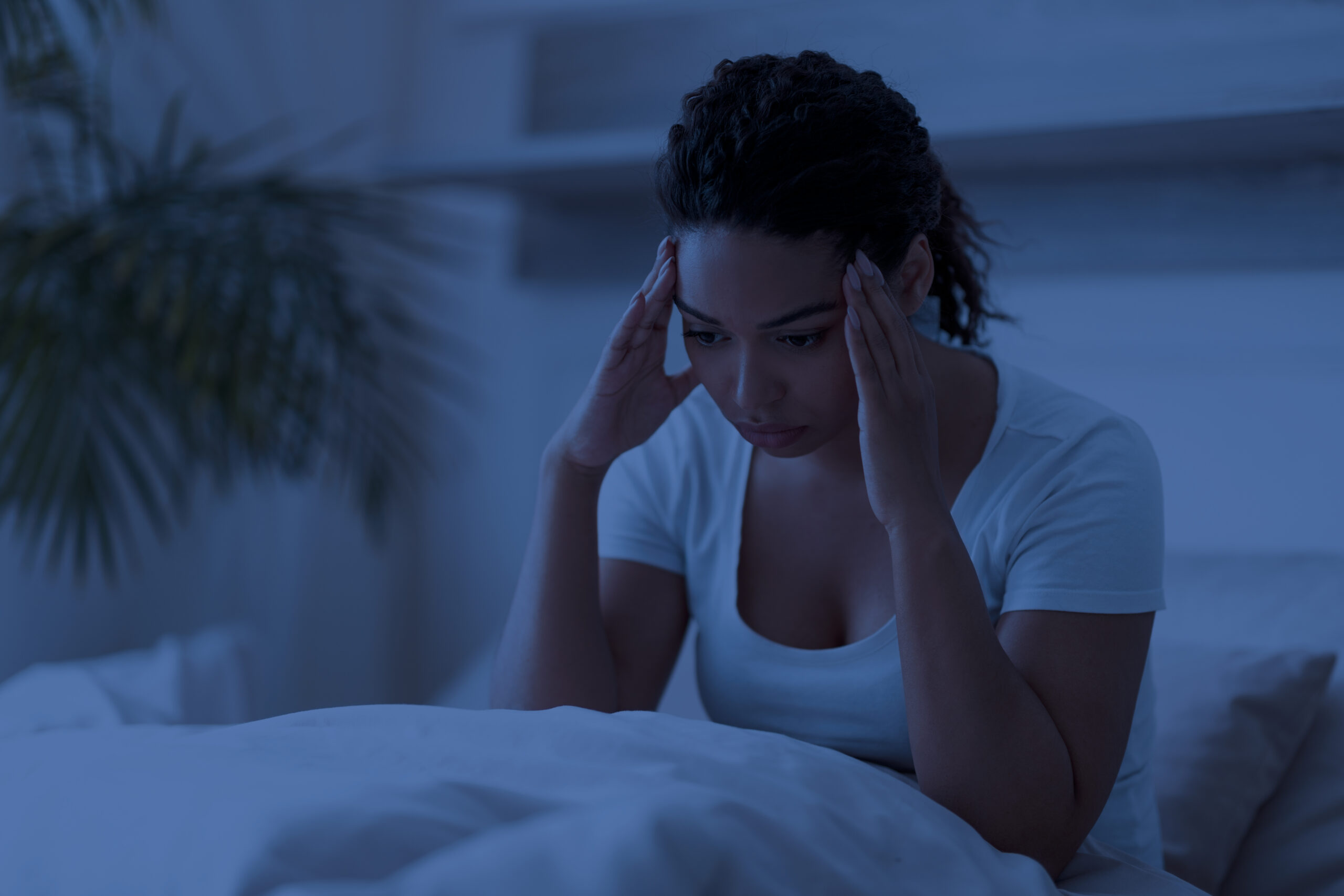
Many worries contain a real concern, but thinking about that concern repeatedly does not always produce a useful decision. The mind may continue reviewing the same possibilities because stopping feels irresponsible, even when no new information is being generated.
Bedtime can gradually become associated with planning, reviewing, and preparing rather than rest. The person may feel physically tired while remaining mentally engaged with work that cannot actually be completed from bed.
Planning usually produces something concrete:
- A decision about what happens next.
- A written reminder.
- A specific question to ask.
- A realistic time to revisit the concern.
- One action that can be completed tomorrow.
Repetitive worry often produces:
- The same questions without new answers.
- Increasingly unlikely scenarios.
- Greater pressure to reach certainty.
- More physical tension.
- Additional checking or reassurance.
- Less confidence in decisions already made.
When planning turns into repetitive mental review, understanding the cycle of anxiety and overthinking may help clarify why continued analysis rarely produces a satisfying answer.
The Pressure to Sleep Can Become Another Source of Anxiety
A difficult night may initially feel frustrating but manageable. After several difficult nights, bedtime itself can begin creating worry because the person expects another struggle.
Sleep then becomes a performance that must happen correctly and on schedule. Checking the clock, calculating the hours remaining, and predicting how terrible tomorrow will feel can increase alertness at the exact moment the person is trying to settle.
This cycle may look like:
- You notice that you are still awake.
- You calculate how little sleep remains.
- You predict that tomorrow will go badly.
- Your body becomes more tense and alert.
- You monitor yourself for signs of sleep.
- Remaining awake begins to feel like evidence that something is wrong.
Why Forcing Yourself to Stop Thinking May Backfire
Telling yourself not to think about a concern still requires checking whether the thought is present. That monitoring can keep the concern active, especially when its return is treated as a failure.
A more flexible response is to notice that the mind is producing a worry without immediately entering a debate with it. You do not have to prove that the feared outcome is impossible before allowing the thought to remain unanswered for the night.
A response might sound like:
- “My mind is looking for certainty because tomorrow matters to me.”
- “This concern may be important, but I cannot resolve it effectively from bed.”
- “I can feel anxious without turning the feeling into another task.”
- “I have already decided when I will return to this tomorrow.”
- “Rest does not require complete certainty.”
Anxiety at Night Is Not Always Overthinking
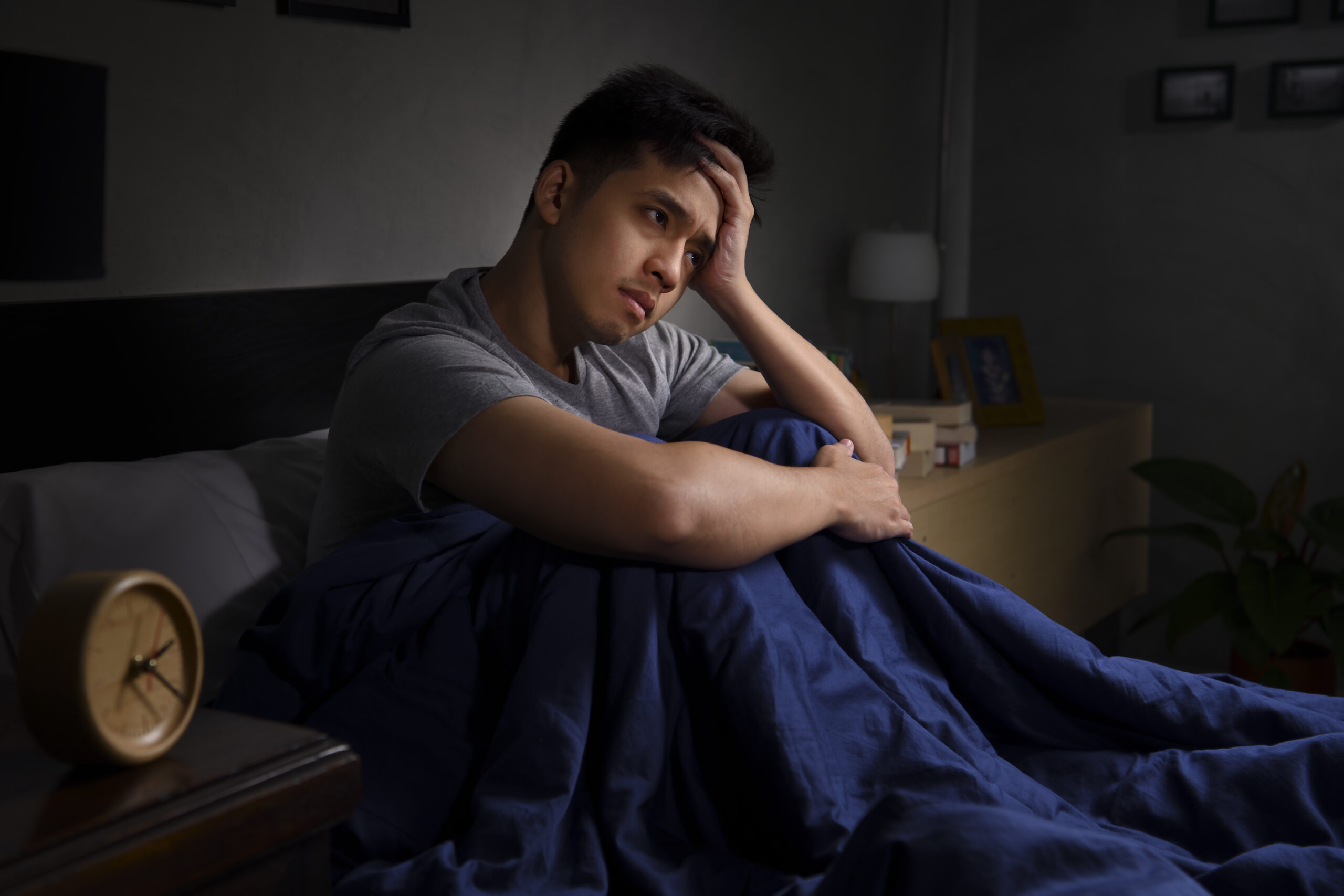
Thoughts may be the most noticeable part of nighttime anxiety, but the experience can also appear physically. Someone may feel tense, restless, warm, unsettled, or unusually aware of ordinary bodily sensations.
The NIMH notes that anxiety may be associated with difficulty relaxing, concentration problems, muscle tension, fatigue, and trouble falling or staying asleep. These experiences can interact, but their presence does not automatically explain why an individual is having difficulty at night.
Physical experiences may include:
- Tightness in the jaw, neck, or shoulders.
- Restlessness or difficulty finding a comfortable position.
- Shallow or hurried breathing.
- Increased awareness of heartbeat.
- Stomach discomfort.
- Feeling tired but unable to settle.
- Repeatedly changing position or checking the time.
Learning about the physical symptoms of anxiety may help explain why nighttime distress can involve muscle tension, restlessness, stomach discomfort, or changes in breathing.
Anxiety at Night vs. Nocturnal Panic Attacks
Anxiety at night often develops while someone is preparing for bed or trying to fall asleep. It may build gradually through worry, tension, planning, or fear about not getting enough rest.
A nocturnal panic attack usually refers to waking from sleep with a sudden surge of panic symptoms. Someone can experience both patterns, but an article about nocturnal panic attacks addresses a different experience from worry that becomes louder before sleep.
Questions that may help clarify the pattern include:
- Did the anxiety begin before falling asleep?
- Did you wake suddenly after already being asleep?
- Was the experience dominated by ongoing worry or a rapid surge of fear?
- Were you reviewing a specific concern, or did the alarm seem to arrive without a clear thought?
- Did anxiety build gradually as you monitored the time?
- Has fear of another episode begun changing your bedtime routine?
How Unfinished Responsibilities Follow You Into the Night
An unfinished task can remain mentally active when the next step is unclear. The mind may continue returning to it because it does not trust that the responsibility has been captured somewhere reliable.
Writing down the task can help, but a vague reminder such as “fix everything tomorrow” may preserve the same overwhelm. A useful note identifies what needs attention, when you will revisit it, and the smallest visible action available.
Instead of writing:
- “Deal with the project.”
- “Fix the relationship.”
- “Get organized.”
- “Figure out the money problem.”
- “Stop falling behind.”
Try writing:
- “Open the project instructions at 9:00 a.m.”
- “Decide when to request a conversation.”
- “Place this week’s documents in one folder.”
- “Review the most recent statement after breakfast.”
- “Choose the first overdue responsibility tomorrow afternoon.”
Create a Clear Ending for the Day
Moving directly from emails, household responsibilities, entertainment, or problem-solving into bed may not give your attention time to shift. A short and repeatable transition can signal that active decision-making is ending for the evening.
The routine does not need to be elaborate or perfectly calming. Its purpose is to reduce unnecessary choices and create a dependable boundary between what still matters and what must wait.
A realistic transition might include:
- Write down unfinished responsibilities.
- Choose one priority for tomorrow.
- Lower unnecessary stimulation.
- Complete the same brief personal-care routine.
- Place work materials outside the sleeping area.
- Set a reasonable boundary for checking messages.
- Engage in a quiet activity that does not require achievement.
Maintaining consistent sleep and wake times, choosing quiet activities before bed, and reducing bright artificial light are commonly recommended healthy sleep habits. These habits may not address the underlying cause of nighttime anxiety, but they can create a steadier and less stimulating transition into rest.
Give Worry a Time and Place Outside Bed
Postponing worry does not mean pretending that a concern is unimportant. It means choosing a time when you are more capable of evaluating the situation and taking action.
A brief scheduled check-in earlier in the evening can give concerns a defined place to go. During that time, separate problems that require action from uncertainties that cannot be completely resolved.
You might ask:
- Is there an action available to me?
- Does this decision need to happen tonight?
- What information is currently missing?
- Have I already made a reasonable plan?
- Am I solving the concern or repeating it?
- What would be sufficient preparation rather than perfect preparation?
Reduce Reassurance and Repeated Checking
Checking tomorrow’s schedule once may be useful, while checking it repeatedly may keep uncertainty emotionally active. Reassurance can also provide temporary relief without helping the person become more comfortable leaving a question unanswered.
Notice which nighttime behaviors briefly reduce anxiety but make the concern return more strongly. The goal is not to eliminate every practical check; it is to distinguish reasonable preparation from repetition driven by the need to feel completely certain.
Common examples include:
- Repeatedly checking an alarm.
- Reviewing the same message several times.
- Searching symptoms or feared outcomes late at night.
- Asking someone to confirm that everything will be okay.
- Rechecking doors, appliances, or tomorrow’s schedule.
- Calculating the amount of remaining sleep throughout the night.
Respond to the Body Without Turning Calm Into a Test
Relaxation strategies can become frustrating when they are used as a demand: “This must make the anxiety disappear.” If the feeling remains, the person may conclude that the strategy failed or that the night is already lost.
A gentler goal is to offer the body a less demanding condition without requiring immediate calm. Slowing the pace of an activity, releasing obvious tension, or allowing the exhale to remain comfortable can be useful even when anxiety does not vanish.
Possible responses include:
- Unclench the jaw without repeatedly checking it.
- Let the shoulders rest rather than forcing them downward.
- Notice the support beneath your body.
- Use a slower, comfortable breathing rhythm without taking exaggerated breaths.
- Name a few neutral details in the room.
- Remind yourself that discomfort and danger are not automatically the same.
Notice What Happens During the Day
Nighttime anxiety is not always maintained exclusively at night. Avoided conversations, unmade decisions, constant stimulation, and a lack of emotional pauses during the day can all leave more material waiting for attention after dark.
Creating small points of reflection earlier may reduce the sense that bedtime is the first opportunity to notice how you are doing. Even a brief pause can help identify tension before it becomes an entire evening of mental review.
Useful questions include:
- What concern have I been postponing?
- Did I agree to something that does not feel sustainable?
- Am I carrying a decision that needs clarification?
- Have I had any quiet time that was not also screen time?
- Is there an emotion I have been trying to outwork?
- What can be addressed now, and what needs to wait?
How Counseling May Help With Anxiety at Night

Counseling can help identify what nighttime anxiety is attempting to accomplish. The pattern may involve preparing for uncertainty, preventing mistakes, reviewing interactions, controlling physical sensations, or avoiding feelings that become noticeable when the day slows down.
A therapist can also help distinguish useful planning from repetitive worry and explore how daily routines reinforce the pattern. The goal is not to guarantee a perfectly quiet mind every night, but to develop more flexible responses when worry, tension, or wakefulness appears.
Counseling may focus on:
- Recognizing recurring nighttime triggers.
- Examining beliefs about sleep and next-day functioning.
- Reducing catastrophic predictions.
- Creating clearer boundaries around unfinished responsibilities.
- Responding differently to reassurance seeking and checking.
- Developing a realistic evening transition.
- Making room for uncertainty without continuing to solve it.
- Addressing daytime stress that follows you into the night.
Support for Anxiety at Night Near Cane Island
For people in Cane Island, nighttime may be the first quiet part of a day shaped by work, commuting, school schedules, household responsibilities, and family needs. Anxiety can become more noticeable once those responsibilities pause, even when the day appeared manageable from the outside.
Cane Island residents may attend in-person counseling at our nearby Katy office or choose virtual counseling from within Texas when appropriate and available. Our team can discuss current scheduling options and help you determine which format may work best for your needs.
When to Consider Seeking Support
Consider speaking with a therapist when anxiety at night repeatedly interferes with sleep, creates dread about bedtime, or affects concentration, patience, relationships, and everyday functioning. Support may also be useful when you organize your entire evening around preventing worry but still feel unable to settle.
You do not need to wait until every night becomes difficult before discussing the pattern. Anxiety Counseling can help you understand what keeps the anxiety active and develop responses that are realistic enough to use when you are already tired.
Conclusion
Anxiety at night can feel convincing because the mind is trying to solve tomorrow while the body is attempting to end today. The harder you work to eliminate every thought, sensation, or uncertainty, the more bedtime may begin to feel like another responsibility.
For people in Cane Island and throughout Katy, a more sustainable response may begin with understanding the pattern rather than fighting every anxious moment. Clearer boundaries, fewer repeated checks, a dependable transition, and appropriate counseling support can gradually make nighttime feel less like a problem that must be solved.
FAQs
Is counseling for anxiety at night available near Cane Island?
Yes. Acceptance Path Counseling supports people near Cane Island and throughout Katy who experience persistent nighttime worry, physical tension, difficulty settling down, or fear about not getting enough sleep. Counseling can help identify the thoughts, routines, and responses that may be keeping anxiety active at night.
Can Cane Island residents attend anxiety counseling in person or online?
Yes. Cane Island residents may attend in-person sessions at our nearby Katy office or choose virtual counseling from within Texas when appropriate and available. Our team can discuss current scheduling options and help you determine which format may work best for your needs.
When should someone near Cane Island seek support for anxiety at night?
Consider seeking support when nighttime anxiety repeatedly disrupts sleep or begins affecting concentration, patience, relationships, work, school, or everyday routines. Counseling may also be helpful when fear of another difficult night leads to repeated checking, reassurance seeking, bedtime avoidance, or ongoing worry about sleep.
Why does my anxiety become worse at night?
Anxiety may feel stronger at night because daytime responsibilities are no longer competing for your attention. Unfinished tasks, uncertainty about tomorrow, unresolved emotions, physical tension, and pressure to fall asleep can become more noticeable when the environment grows quiet.
Is anxiety at night the same as a nocturnal panic attack?
No. Anxiety at night often develops gradually while someone is preparing for bed or trying to fall asleep, while a nocturnal panic attack typically involves waking from sleep with a sudden surge of panic symptoms. The experiences can overlap, but their timing and progression may help clarify the pattern.