

What Are Nocturnal Panic Attacks?

A nocturnal panic attack is a sudden episode of intense fear or discomfort that begins during sleep and wakes the person. Unlike anxiety that builds while someone is lying awake, the person is already asleep when the episode begins.
The NIMH explains that panic attacks can occur at any time, including during sleep. The experience may involve many of the same physical and emotional sensations that appear during a daytime panic attack.
Someone may wake with:
- A pounding or rapidly beating heart.
- Sweating, shaking, or chills.
- Chest tightness or discomfort.
- Shortness of breath or a feeling of choking.
- Dizziness or lightheadedness.
- Tingling or numb sensations.
- Nausea or stomach discomfort.
- A sudden fear of losing control.
- A sense that something terrible is happening.
- Confusion about why the body feels so activated.
Why Can Nighttime Panic Feel So Frightening?
Waking abruptly with a racing heart or difficulty catching your breath can feel disorienting because there is no gradual build-up or obvious explanation. The mind may try to interpret the sensations before you are fully awake, and frightening explanations can arrive quickly.
Darkness, quiet, and the absence of immediate context may make the sensations feel even more threatening. A person may understand later that the episode resembled panic while feeling completely convinced of danger during the moment itself.
Nighttime panic may feel particularly intense because:
- The person is awakened without preparation.
- Physical sensations may be noticed before the surroundings become clear.
- There may be no remembered anxious thought that explains the reaction.
- The person may feel alone or uncertain about what to do.
- Fatigue can make it harder to think flexibly.
- The sudden awakening may create fear of going back to sleep.
- Each sensation may be monitored for signs that the episode is returning.
Can a Panic Attack Happen Without an Anxious Thought?

Yes. Someone does not need to be consciously worrying immediately before a nocturnal panic attack because the episode begins while the person is asleep.
The absence of an obvious trigger does not make the experience imaginary or intentionally created. Panic can involve a rapid alarm response, with the mind trying to explain the physical activation after it has already begun.
A person may report:
- “I was asleep and suddenly woke up terrified.”
- “My heart was racing before I understood where I was.”
- “Nothing stressful was happening in the dream that I remember.”
- “I felt certain something was wrong even though I could not explain why.”
- “The fear arrived before I had a thought about it.”
Nocturnal Panic Attacks vs Nightmares
A nightmare is a distressing dream that may cause someone to wake feeling frightened, upset, or unsettled. The person may remember images, events, or themes from the dream, although dream recall can vary.
A nocturnal panic attack is defined by the sudden panic response that awakens the person rather than by the content of a dream. Someone may wake with intense physical sensations and no clear memory of a frightening dream.
The experiences can sometimes feel similar, but useful questions include:
- Do I remember a frightening dream or storyline?
- Did the fear continue mainly because of the dream content?
- Did I wake primarily aware of intense physical sensations?
- Did the panic seem to appear without a remembered dream?
- Did fear of the physical sensations continue after I became oriented?
Nocturnal Panic Attacks vs Anxiety at Night
Nighttime anxiety often develops while someone is still awake. Worry may increase as distractions disappear, unfinished responsibilities return to mind, or the person begins anticipating another difficult day.
A nocturnal panic attack begins after sleep has already started. Someone may experience both patterns, but identifying when the distress begins can help clarify what is happening.
Nighttime anxiety may involve:
- Lying awake while thoughts become increasingly difficult to quiet.
- Replaying conversations or anticipating future problems.
- Feeling tense while trying to fall asleep.
- Watching the clock and worrying about not getting enough rest.
- Gradually becoming more physically activated.
Nocturnal panic may involve:
- Falling asleep before the episode begins.
- Waking suddenly with intense fear.
- Becoming aware of a racing heart, shaking, or breathing changes.
- Feeling confused because no clear worry preceded the episode.
- Developing anxiety about sleep after the attack has ended.
Does Having a Nocturnal Panic Attack Mean You Have Panic Disorder?
No. A person can experience one or more panic attacks without having panic disorder, and the timing of an attack does not determine a diagnosis.
Panic disorder involves recurrent, unexpected panic attacks followed by persistent concern about additional attacks or meaningful changes in behavior related to that fear. The broader pattern—not one isolated nighttime episode—is what matters.
Changes that may deserve attention include:
- Frequently worrying about having another attack.
- Monitoring physical sensations throughout the day or night.
- Delaying bedtime because sleep no longer feels safe.
- Avoiding sleeping alone or away from home.
- Changing routines in an effort to prevent panic.
- Feeling unable to concentrate because another attack seems possible.
- Becoming increasingly restricted by fear.
- Experiencing repeated, unexpected panic attacks during sleep or while awake.
How Fear of Another Attack Can Disrupt Sleep
After waking in panic, bedtime may stop feeling neutral. The person may begin approaching sleep as a situation in which another frightening episode could occur without warning.
This fear can create a difficult cycle: the person becomes more alert while preparing for sleep, notices physical sensations more closely, and interprets ordinary changes as possible signs of another attack. Even when an attack does not occur, the night may become organized around trying to prevent one.
The cycle may look like this:
- A nocturnal panic attack occurs.
- The person becomes frightened by what the sensations might mean.
- Bedtime begins to feel unpredictable or unsafe.
- The person monitors their heartbeat, breathing, or level of alertness.
- Ordinary sensations are interpreted as early signs of panic.
- Anxiety increases as the person tries to force the sensations to stop.
- Sleep becomes more difficult to approach.
- Fatigue increases sensitivity and reduces the ability to respond the next night flexibly.
When fear of another episode leads to ongoing wakefulness, understanding the patterns that maintain the insomnia cycle may help clarify why sleep becomes increasingly difficult.
When Monitoring the Body Keeps the Alarm Active
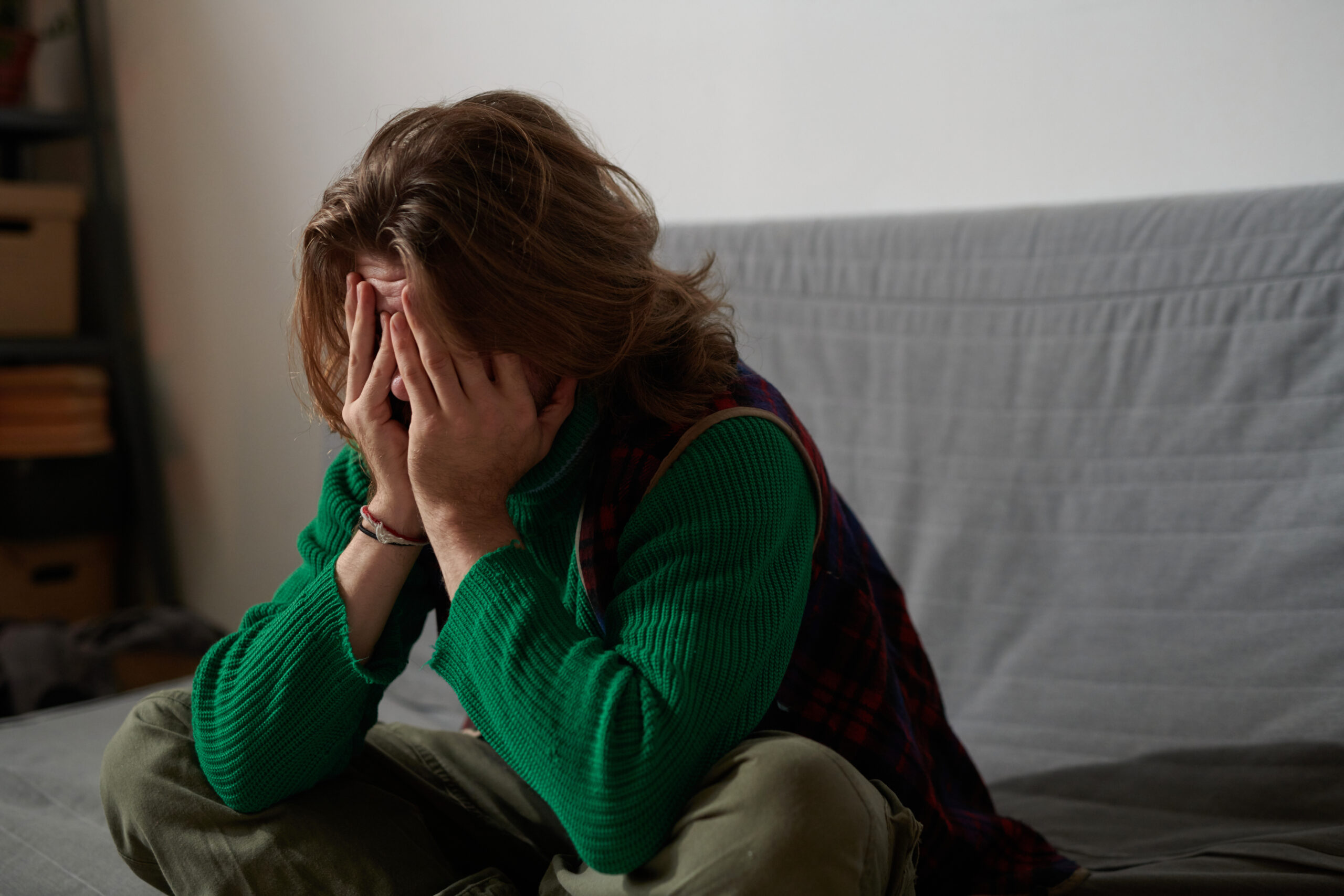
After a frightening episode, checking the body can feel protective. Someone may repeatedly measure their breathing, feel their pulse, scan for chest sensations, or test whether dizziness is returning.
Checking may provide brief reassurance, but that relief can make monitoring feel increasingly necessary. The body then receives sustained attention, making small and ordinary sensations feel more noticeable and significant.
Monitoring may include:
- Repeatedly checking the pulse.
- Testing whether a full breath is possible.
- Scanning the chest for tightness.
- Sitting up whenever the body begins relaxing.
- Searching for explanations during the night.
- Asking for reassurance that nothing is wrong.
- Avoiding positions associated with the previous attack.
- Remaining awake to make sure another episode does not begin.
Why Trying to Force Calm Can Backfire
During panic, people understandably want the sensations to stop immediately. This urgency may lead to taking very large breaths, checking whether calm has arrived, or treating every remaining sensation as evidence that the strategy failed.
A more useful goal may be allowing the alarm response to settle without turning calmness into another performance. Grounding is not about proving that you can eliminate panic on command; it is about helping yourself reconnect with the present while the intensity changes.
Instead of demanding immediate calm, try shifting toward:
- “I can notice what is happening without solving everything this second.”
- “I am waking up, and it may take a moment to become oriented.”
- “I do not have to check every sensation.”
- “This feeling is intense, but intensity can change.”
- “My next step is to reconnect with the room around me.”
What Can You Do During a Nocturnal Panic Attack?
Begin by orienting yourself to the present rather than immediately searching for a complete explanation. Notice where you are, feel the support beneath your body, and allow your surroundings to become clear.
You do not need to use every coping strategy at once. Choose one or two simple actions that reduce confusion without turning the moment into another test you must pass.
You might:
- Place both feet on the floor and notice the pressure beneath them.
- Name several objects you can see in the room.
- Notice the temperature or texture of something nearby.
- Let your breathing settle without repeatedly testing it.
- Release unnecessary tension in your jaw, shoulders, or hands.
- Remind yourself that you have awakened and are becoming oriented.
- Use a short, familiar phrase rather than debating every fearful thought.
- Keep the environment quiet and predictable while the intensity changes.
If the symptoms are new, unusually severe, feel different from previous panic episodes, or create uncertainty about immediate safety, seek urgent help rather than assuming panic is the explanation.
Additional strategies for managing panic attacks may help you respond to the surge of fear without treating every physical sensation as an emergency.
What Should You Do After the Intensity Decreases?
The period after an attack can feel physically and emotionally draining. You may feel tired, shaky, unsettled, embarrassed, or reluctant to return to sleep.
Try not to turn the rest of the night into an investigation of everything that might have caused the episode. A brief record may be useful later, but repeatedly replaying the event can keep attention fixed on danger.
Afterward, consider:
- Writing down the approximate time and main sensations.
- Noting whether you remember a dream or clear trigger.
- Recording what helped you become oriented.
- Keeping the notes brief rather than documenting every sensation.
- Returning to a familiar, low-demand routine.
- Avoiding promises that you must prevent all future attacks.
- Reviewing the pattern during the day rather than analyzing it throughout the night.
Common Responses That May Strengthen the Fear Cycle
Many responses to nighttime panic make sense in the short term because they are attempts to regain control. The difficulty begins when a temporary safety behavior becomes something the person believes is necessary every night.
Avoidance can make sleep feel increasingly dangerous because the person has fewer opportunities to learn that fear and physical sensations can change without constant protection. The goal is not to remove every comforting routine, but to notice when life is becoming organized around preventing panic.
The fear cycle may be reinforced by:
- Staying awake to prevent another attack.
- Refusing to sleep without another person nearby.
- Avoiding travel or overnight stays.
- Checking the body repeatedly before bed.
- Searching symptoms every time a sensation appears.
- Changing routines after every difficult night.
- Treating poor sleep as proof that another attack will happen.
- Avoiding ordinary activities associated with bodily sensations.
- Canceling daytime plans because another episode feels possible.
Track Patterns Without Turning Sleep Into a Project
A short record can help identify whether episodes are recurring and how they affect daily life. The purpose is to collect useful context, not to monitor the body so closely that every change feels important.
Keep the record simple enough that it does not become part of the anxiety cycle. A few consistent details are usually more useful than an extensive account written while you are frightened.
You might record:
- When you went to sleep.
- Approximately when you woke.
- The main physical and emotional sensations.
- Whether you remember a dream.
- How long the most intense period seemed to last.
- What helped you reconnect with the present.
- Whether you avoided anything the following day.
- How much fear you felt about returning to sleep.
When Should You Consider Counseling?

Counseling may be helpful when nighttime panic occurs repeatedly, creates ongoing fear of sleep, or changes how you approach ordinary activities. Support may also be worthwhile when worry about another attack continues during the day or begins restricting where you sleep, travel, or spend time.
You do not need to wait until sleep or daily functioning becomes completely unmanageable. Exploring the pattern earlier can help clarify how physical sensations, fearful interpretations, avoidance, and anticipatory anxiety are interacting.
Consider reaching out when:
- Nocturnal panic attacks continue occurring.
- Fear of another attack makes bedtime difficult.
- You spend significant time monitoring physical sensations.
- You avoid sleeping alone or away from home.
- Fatigue begins affecting work, school, relationships, or routines.
- Panic attacks also occur during the day.
- Reassurance provides only brief relief.
- Your life is becoming increasingly organized around preventing panic.
How Counseling Can Help With Nocturnal Panic Attacks
Counseling can help someone examine what happens before, during, and after a nighttime panic episode. The work may include understanding the panic cycle, recognizing frightening interpretations of physical sensations, reducing safety behaviors, and responding differently to anticipatory fear.
The purpose is not to promise that uncomfortable sensations will never return. Therapy can help reduce the extent to which fear of panic controls sleep, choices, and everyday life.
Counseling may focus on:
- Understanding how panic sensations become associated with danger.
- Identifying thoughts that intensify the alarm response.
- Developing grounding strategies that do not depend on perfect calm.
- Reducing repeated checking and reassurance seeking.
- Addressing fear of sleep gradually.
- Examining avoidance that developed after an attack.
- Building a more flexible response to physical sensations.
- Preparing for future episodes without organizing life around them.
Understanding Nocturnal Panic Attacks Near Rayford
People living near Rayford may balance commuting, work, school schedules, family responsibilities, and busy days that leave little room to process what they are carrying. Waking in sudden panic can make nighttime feel like another period of vigilance rather than an opportunity to rest.
Acceptance Path Counseling offers panic disorder treatment in The Woodlands for people experiencing recurring panic attacks, fear of future episodes, monitoring of physical sensations, or avoidance built around panic. Counseling can provide space to understand the pattern and develop responses suited to the person’s needs without assuming that every nighttime episode has the same explanation.
Conclusion
Nocturnal panic attacks can feel especially frightening because they interrupt sleep with intense sensations before the person has time to understand what is happening. The lack of an obvious trigger may add confusion, but one nighttime episode does not automatically mean someone has panic disorder.
People near Rayford and throughout The Woodlands can explore support when repeated attacks, fear of sleep, or worry about another episode begins affecting daily choices. Counseling can help someone understand the cycle, respond to physical sensations with greater flexibility, and reduce the amount of life organized around preventing panic.
FAQs
Is counseling for nocturnal panic attacks available near Rayford?
Yes. Acceptance Path Counseling provides counseling for people near Rayford and throughout The Woodlands who experience nighttime panic, recurring panic attacks, fear of another episode, or avoidance related to panic. Counseling can help identify the patterns surrounding these episodes and develop more flexible ways to respond.
Can Rayford residents attend panic disorder counseling in person or online?
Yes. Rayford residents may attend in-person sessions at our nearby The Woodlands office or choose virtual counseling from within Texas when appropriate and available. Our team can discuss current scheduling options and help you determine which format may work best for your needs.
When should someone near Rayford seek support for nocturnal panic attacks?
Consider seeking support when nighttime panic occurs repeatedly, creates fear of going to sleep, or leads to ongoing monitoring of physical sensations. Counseling may also be helpful when fatigue and worry about another attack begin affecting work, relationships, travel, or everyday routines.
Are nocturnal panic attacks the same as nightmares?
No. A nightmare is a distressing dream that may wake someone feeling frightened, while a nocturnal panic attack involves waking from sleep with a sudden panic response. Someone experiencing nocturnal panic may not remember a frightening dream, although nighttime experiences can sometimes be difficult to distinguish without considering the broader pattern.
Does having nocturnal panic attacks mean someone has panic disorder?
Not necessarily. One nighttime panic attack does not establish panic disorder, and someone can experience panic attacks without developing the condition. Panic disorder involves recurrent, unexpected panic attacks accompanied by ongoing concern or behavioral changes related to fear of future attacks.