
Contamination OCD is a form of obsessive-compulsive disorder (OCD) where the main fear is of being contaminated by germs, dirt or anything that feels unclean. Washing, cleaning and avoiding are how people try to make that fear stop.
It isn’t a love of cleaning, and most people who live with it would give a lot to be free of it. If you wash until your hands hurt and still don’t feel clean, the pattern has a name, and it can loosen.
This guide covers the fears and rituals, how OCD differs from ordinary caution, why washing keeps it going, and how it’s treated.
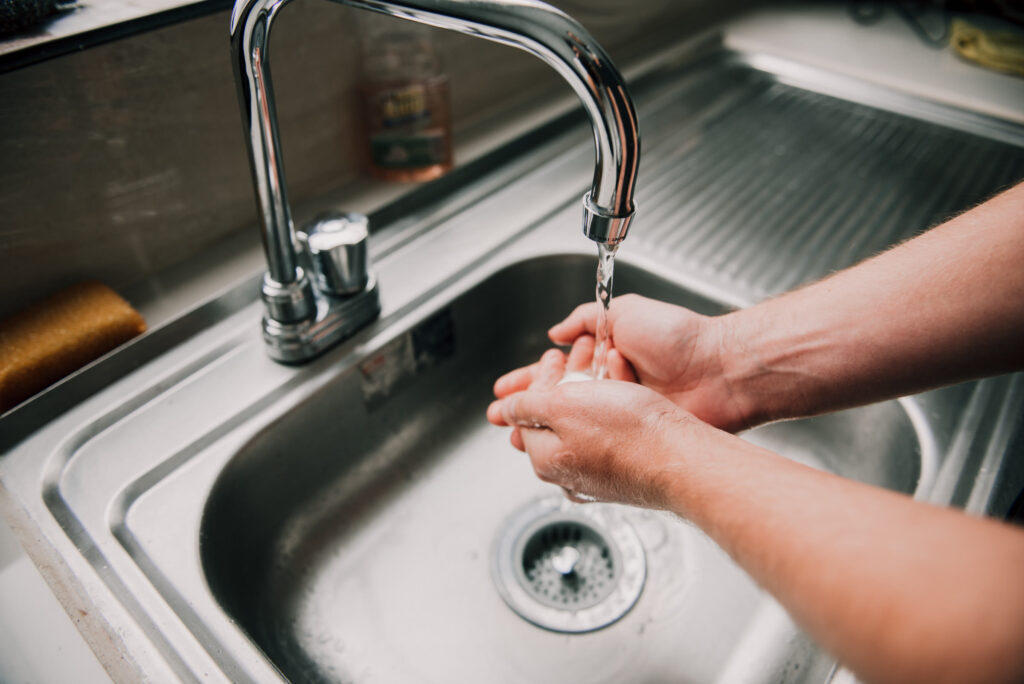
What Is Contamination OCD?
OCD has two parts. An obsession is an unwanted thought, image or feeling that keeps coming back and feels alarming, and a compulsion is the thing you do to make that alarm go away.
In contamination OCD, the obsession is about being contaminated. The compulsion is usually washing, cleaning, avoiding or checking.
Two things tend to drive it, and many people have both:
- A fear of harm, such as getting sick or passing something on to a person you love
- A feeling of being dirty or “not right,” with no particular danger in mind
The second one is often disgust, or a sense that something is unfinished. You may know perfectly well that nothing harmful is on your hands, and they still feel wrong.
That gap between what you know and what you feel is one of the hardest parts. Knowing the facts doesn’t switch the feeling off.
It can also be hard to explain to other people. “Just wash once and stop” sounds simple, and it misses how loud the urge is in the moment.
Common Contamination Fears
The feared thing varies from person to person. Some of the most common ones are:
- Germs and illness, such as a cold, the flu or a stomach bug
- Bodily fluids, including blood, saliva, urine or anything from a bathroom
- Chemicals, cleaning products, pesticides or anything “toxic”
- Dirt, grime, trash, floors, shoes or public surfaces
- Food, such as expiration dates, raw meat, or how a meal was handled by someone else
For some people the fear points outward. They worry less about getting sick themselves and more about carrying something home to a child, a partner or a parent.
Food worries can make eating out, grocery shopping or cooking for others feel risky. Some people find themselves checking dates over and over, or throwing out food that is perfectly fine.
Mental contamination
Not every contamination fear starts with touch. Mental contamination is the feeling of being dirty after a person, a memory or a thought, with no physical contact at all.
You might feel unclean after an unkind conversation, or after a thought you didn’t want to have. Washing often doesn’t help for long, because the dirt seems to be on the inside.
Moral contamination
Moral contamination is the feeling of being tainted by something “bad” or immoral, such as a person you disapprove of, a news story or an act you regret. The urge to wash comes from guilt or shame more than from fear of germs.
This overlaps with another form of OCD, covered in moral scrupulosity OCD.
Common Rituals and Avoidance
Rituals are the things you do to feel clean or safe again. Avoidance is the things you stop doing so the fear never gets triggered.
Common rituals include:
- Washing your hands, or showering, longer or more often than you want to
- Cleaning surfaces, floors or objects again and again
- Changing clothes after being out, or keeping “outside” clothes away from “inside” ones
- Setting up “clean zones” at home that other people aren’t allowed to touch
- Asking family members to wash, change or stay out of certain rooms
- Asking others for reassurance, such as “Does this look clean to you?”
- Reviewing or checking in your head, replaying whether something touched you
Avoidance can look like skipping public restrooms, not touching doorknobs, keeping away from certain people, or turning down invitations. Each avoided place makes life a little smaller.
The checking part is its own pattern, and checking everything OCD explains it in more detail.
Contamination OCD vs Being a Germaphobe
Lots of people call themselves germaphobes because they’re careful about germs. Wiping down a shopping cart or washing after the bus is ordinary caution, and plenty of people do it.
Contamination OCD goes further than preference. Here’s how the two tend to differ:
| Sign | Ordinary caution | Contamination OCD |
|---|---|---|
| Time it takes | A quick wash, then you move on. | Often an hour or more a day, sometimes much longer. |
| How it feels | A mild preference for clean hands. | Distress, dread or disgust that builds until you act. |
| Rules | Flexible: you adjust if the situation changes. | Often strict, with exact steps, counts or orders that must be followed. |
| Does it feel finished? | Yes, clean is clean. | Rarely, so you start over “just in case.” |
| Effect on life | Little or none. | Can shrink your day, strain relationships and get in the way of work or school. |
What separates the two is whether you can stop. With OCD, the habit starts running your day instead of the other way around.

Contamination OCD vs Health Anxiety
These two can look alike, and they often sit side by side. The difference is mostly in what the fear is about.
In contamination OCD, the fear is usually about catching something or spreading it, and the ritual is usually washing or avoiding. In health anxiety, the fear is that you already have an illness, and the habits tend to be checking your body, searching symptoms and seeking medical tests.
Some people have both. A clinician can help sort out which pattern is doing what, because the best way forward depends on it.
A useful question to ask yourself is what you’re trying to prevent. If the answer is “getting or giving something,” that points one way, and if it’s “finding out I’m already sick,” it points the other.
Why Washing Makes It Stronger
Washing feels like the answer, and for a few minutes it is. The trouble is what it teaches your brain.
Here’s the loop most people recognize:
- A trigger shows up: a doorknob, a stranger’s cough or a thought.
- Fear or disgust spikes.
- You wash, clean or avoid.
- You get short relief.
- Your brain learns that the ritual was what kept you safe, so the fear comes back stronger next time.
Each lap makes the ritual feel more necessary. Over time the rules can grow, the triggers can multiply and the washing can stretch out.
Reassurance works the same way. When someone tells you the counter is clean, the doubt eases for a moment and then returns, and you need to ask again.
This is the pattern described in the OCD cycle. Relief is real, and it’s also the thing that keeps the problem alive.
The loop can run entirely in your head too. If your OCD is mostly mental rituals, like replaying a moment or reviewing whether you were touched, see Pure O OCD and how to stop OCD thought loops.
How Contamination OCD Is Treated
The best-studied treatment for OCD is exposure and response prevention, or ERP. A trained clinician helps someone face a feared contact in graded steps while they hold back from the ritual.
For example, a person might touch a doorknob and then not wash for a set time. The steps start small and are agreed in advance, and they build as the person gets more comfortable.
Acceptance and commitment therapy (ACT) has also been tested for OCD in its own trials. In one trial, ACT combined with exposure was set against ERP on its own, and both groups improved without either doing better.
Some people also take medication prescribed by a doctor. Our counselors don’t prescribe, and if you see a prescriber, the two run side by side.
We do not run an ERP program, and no counselor here advertises ERP training. What we do, inside ACT and CBT, is help you delay and shrink a ritual at a pace you set.
That is not ERP. ERP is a graded exposure protocol delivered by an ERP-trained clinician, and we do not deliver that.
If a formal course of ERP with an ERP-trained clinician is what you want, tell us when you ask to be matched and we will say so plainly before you book. You can read more about OCD counseling at Acceptance Path.

Small Steps You Can Try
These aren’t a treatment plan. Think of them as small experiments to see what happens when the ritual loosens a little.
- Delay a wash by a few minutes, and see what the urge does while you wait.
- Shrink the ritual by making it shorter or cutting a step.
- Let the “not clean” feeling sit there without fixing it, even for a short while.
- Notice when you ask for reassurance, and try asking once instead of three times.
- Take back one avoided thing at a time, such as a doorknob or a public restroom.
Keep ordinary hygiene, like washing after the bathroom or after handling raw meat. The aim is to drop the extra rituals, not the everyday ones.
Pick something that feels doable, not something that feels brave. If it turns out to be too big, make it smaller and try again.
Expect the urge to be loud at first. It often rises, peaks and eases without the ritual, and each time you see that, the fear loses a little of its grip.
If you live with family, it can help to tell them what you’re trying. A simple “I’m working on not washing right after this, so please don’t reassure me” gives them something clear to do.
Health note
If your skin is cracked, bleeding or sore from washing, see a doctor. Don’t use harsh chemicals on your skin.
When to Get Help
It’s worth talking to someone if any of these sound familiar:
- Rituals take an hour or more of your day
- Your skin is damaged from washing
- Your life is getting smaller because of what you avoid
- Family members are pulled into your rituals
- It’s getting in the way of work, school or your relationships
You don’t need to wait until it’s severe to ask for help. An hour a day is already a lot of your life to hand over.
We see adults at our offices in Houston-Willowbrook, The Woodlands and Katy, and by video anywhere in Texas. If leaving the house has become hard, starting on video is a reasonable first step.
Ask to be matched About OCD counseling
Frequently Asked Questions
Is contamination OCD real?
Yes. It’s one of the more common forms OCD takes, and OCD is a recognized diagnosis.
How do I know if I have contamination OCD?
Only a licensed clinician can assess that. Signs to look for include fears of contamination that are out of proportion to the real risk, washing or cleaning that takes a lot of time, and avoiding things to prevent the fear.
Is contamination OCD the same as being a germaphobe?
No. Being a germaphobe usually means disliking germs, while contamination OCD involves distress and rituals that are hard to stop and take over your day.
What is mental contamination OCD?
Mental contamination is feeling dirty after a person, a memory or a thought, with no physical contact. Washing often brings only short relief, because the feeling doesn’t come from anything on your skin.
Does ERP mean touching gross things?
Sometimes it means touching things that feel gross, like a trash can lid or a restroom door, but in small steps agreed in advance and never anything truly dangerous. We don’t provide ERP ourselves, so if it’s what you want, tell us when you ask to be matched and we’ll say so plainly before you book.
Can contamination OCD get better?
Yes. Many people improve with treatment, though nobody can promise how long it takes.