
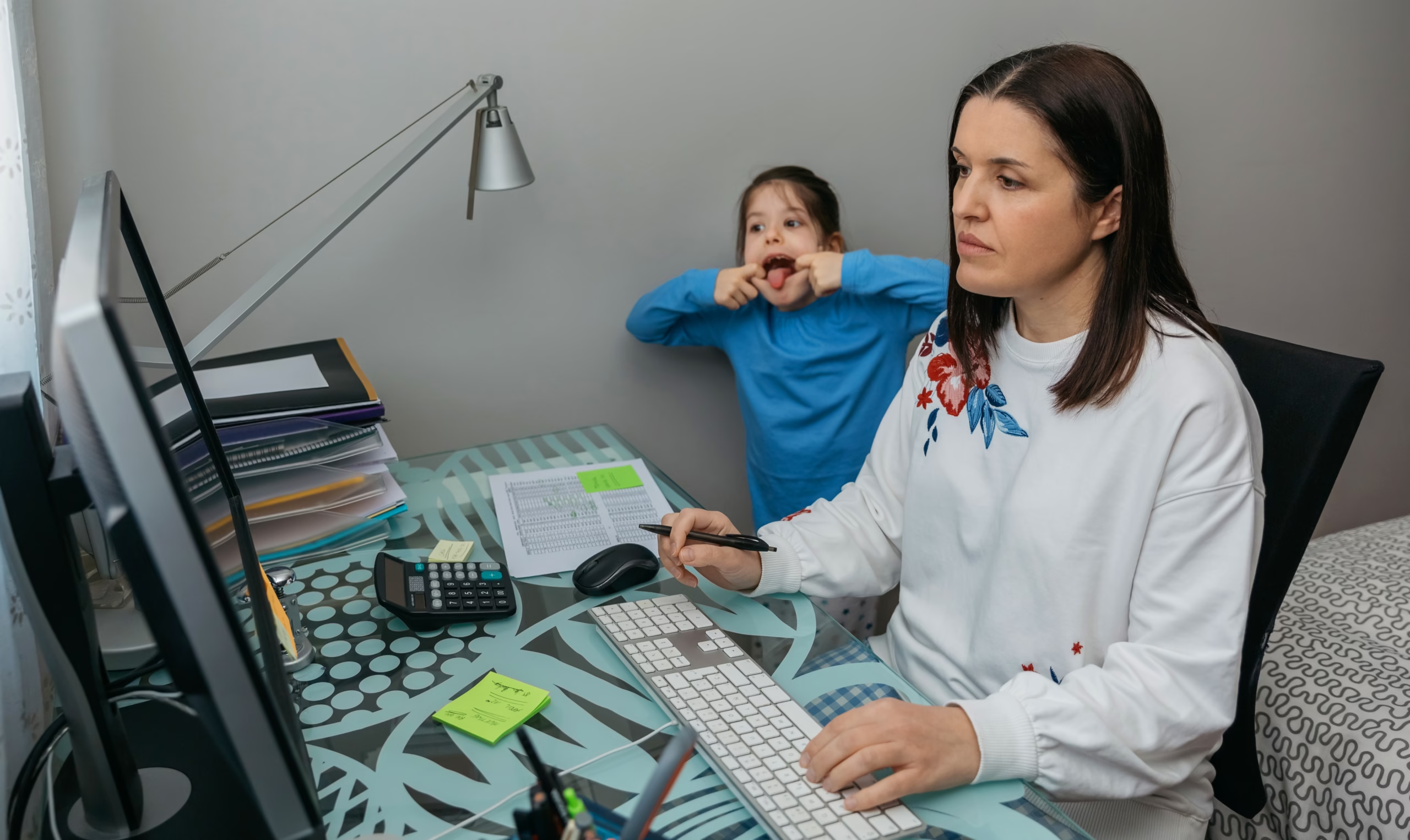
What Can Parenting a Child With ADHD Feel Like?
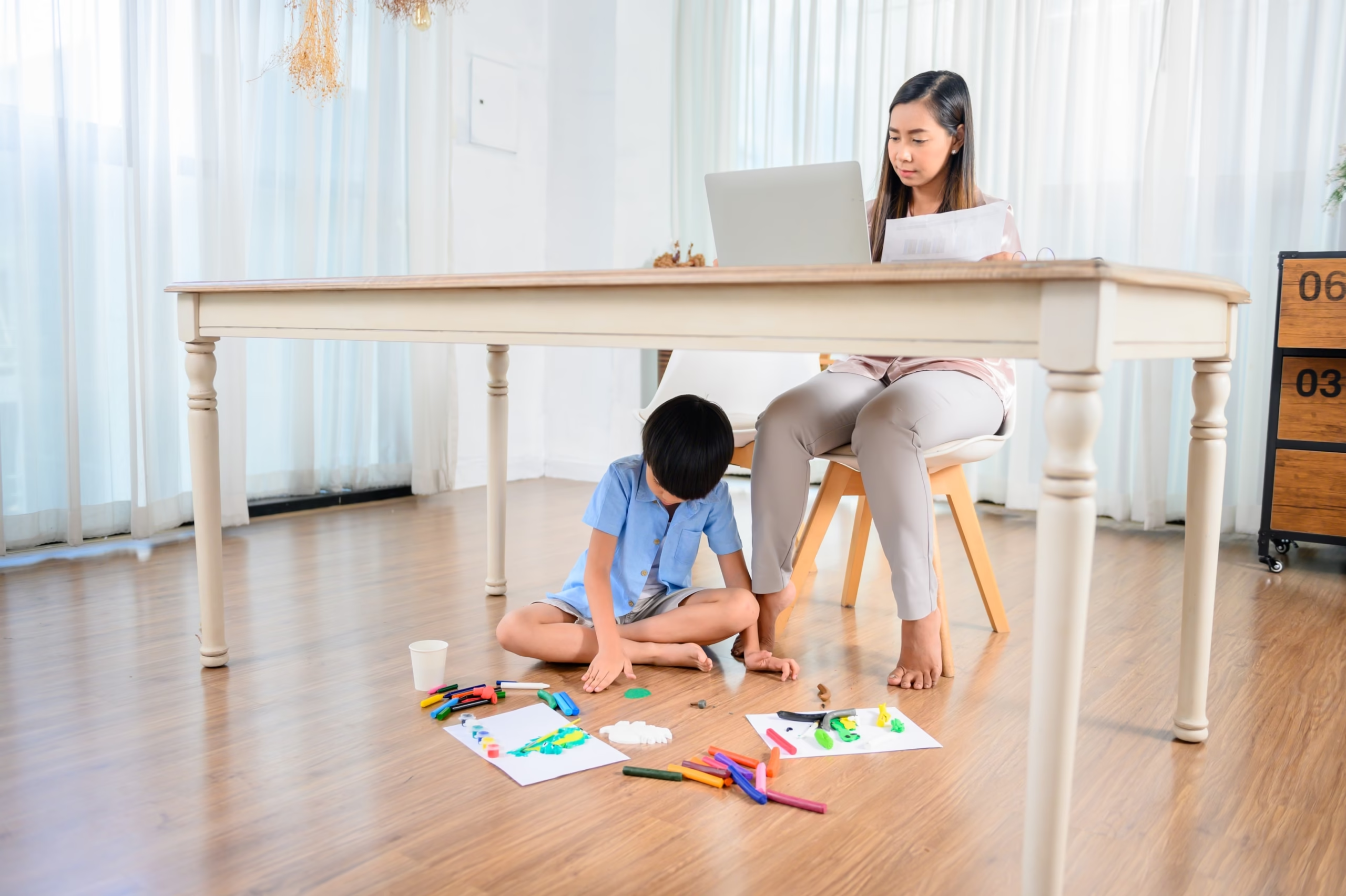
Parenting a child with ADHD can feel confusing because the child’s abilities may appear inconsistent. They might independently complete a complicated activity one day and struggle to begin a familiar routine the next.
Parents may wonder whether the child is not listening, not trying, or testing boundaries. In many situations, the difficulty involves turning an expectation into an organized sequence of actions rather than understanding the expectation itself.
Parents may recognize experiences such as:
- Giving the same reminder several times.
- Discovering that a completed assignment was never submitted.
- Watching a simple morning routine take much longer than expected.
- Seeing frustration increase during transitions.
- Feeling unsure whether to provide help or encourage independence.
- Correcting impulsive behavior that the child immediately regrets.
- Repeating consequences without seeing lasting change.
- Feeling guilty after losing patience.
- Worrying that siblings are receiving less attention.
- Questioning whether the family is being too strict or too flexible.
These experiences can exhaust both the parent and child. Understanding the pattern does not remove expectations, but it can make those expectations easier to teach.
Why Ordinary Parenting Advice May Not Be Enough

Advice such as “be consistent,” “set consequences,” or “use a routine” can sound straightforward. The difficulty is translating broad advice into something that works during an actual morning, homework session, or emotional conflict.
A routine may still be too complicated, and a consequence may occur too long after the behavior to guide what should happen next. Parents need strategies that account for attention, working memory, task initiation, impulses, and transitions.
Why Repeated Reminders Can Stop Working
A child may hear a reminder without holding it in mind long enough to act. Another demand, object, thought, or conversation can replace the instruction before the child completes it.
Repeating the instruction from another room may add sound without increasing clarity. Moving closer, reducing the number of steps, and confirming the first action can make the expectation easier to use.
Instead of:
“Get dressed, brush your teeth, pack your backpack, find your shoes, and meet me downstairs.”
Try:
“Start by getting dressed. Come find me when that part is finished.”
The goal is not to complete every responsibility for the child. It is to provide enough structure for the child to practice completing the sequence.
Give Directions the Child Can Use

Clear directions identify what should happen rather than focusing only on what must stop. “Walk beside me” offers more guidance than “stop running everywhere.”
Keep the instruction brief and allow time for the child to process it. Adding several explanations while the child is already distracted can make the original direction harder to remember.
Helpful approaches include:
- Get the child’s attention before giving the direction.
- Give one or two steps at a time.
- Use concrete language.
- Ask the child to identify the first step.
- Place recurring routines where the child can see them.
- Pause before repeating or adding information.
- Recognize completion with specific feedback.
- Adjust directions according to the child’s age and abilities.
A child needing external structure is not necessarily becoming dependent. Visible support can provide a foundation from which independence develops gradually.
Consistency Does Not Mean Rigidity
Consistency helps a child know what to expect. It does not require every day, consequence, or emotional response to look identical.
A plan that cannot adjust for fatigue, changing schedules, or accumulated stress may create more conflict than stability. Families can maintain the same overall expectation while changing how much support is needed to reach it.
For example, the expectation may remain that the backpack is prepared before bed. Some evenings the child may do this independently, while on a difficult evening the parent may use a checklist or remain nearby.
Make Routines Easier to Follow
A useful routine reduces the number of decisions required during a demanding part of the day. It should be visible, brief, and realistic enough to repeat.
If a routine fails consistently, the family may need to examine the routine rather than assuming the child needs stronger consequences. The sequence may contain too many steps, begin too late, or depend heavily on verbal reminders.
Consider:
- Which step is usually forgotten?
- Where does the child become distracted?
- Does the routine require finding several misplaced items?
- Is there enough time for transitions?
- Would preparation the night before reduce pressure?
- Does the child know what “ready” specifically means?
- Is the parent giving several instructions simultaneously?
- Which part can the child complete independently?
Changing one repeated obstacle can be more effective than replacing the entire household routine.
Managing Difficult Morning Routines
Mornings combine time pressure, transitions, multiple responsibilities, and competing needs. Once everyone feels rushed, even a small delay can become the beginning of an argument.
Prepare predictable items before the morning begins and keep the routine in the same general order. Build in more time than the routine appears to require, particularly when the child tends to lose track of transitions.
A manageable morning might include:
- Preparing clothing and school materials the night before.
- Using a short visual checklist.
- Keeping frequently needed items in consistent locations.
- Giving transition warnings.
- Limiting unnecessary choices.
- Completing one stage before introducing the next.
- Leaving a realistic buffer before departure.
- Reviewing problems later rather than during the rush.
The goal is not a perfectly calm morning. It is a routine that does not depend entirely on urgency, criticism, or last-minute rescue.
Preparing for Transitions
Stopping an enjoyable activity can be difficult when the child is deeply engaged. A sudden demand to switch activities may feel larger internally than it appears from the outside.
Advance notice allows the child to begin shifting attention before the current activity ends. The warning should identify both what is ending and what will happen next.
Parents might say:
- “You have ten minutes before we leave.”
- “When this episode ends, it will be time to get ready.”
- “You can finish this part, and then we are putting the game away.”
- “First shoes, then you can choose the music in the car.”
- “You look disappointed that this has to end. The plan is still changing.”
Validation does not require removing the transition. A parent can acknowledge frustration while maintaining the expectation.
Reducing Homework Conflict
Homework requires remembering the assignment, bringing home materials, starting without classroom structure, sustaining attention, managing frustration, and submitting the work later. Difficulty at any point can derail the entire process.
Before assuming the child is avoiding homework, identify which part is creating the obstacle. The appropriate support depends on whether the problem involves task initiation, unclear directions, missing materials, fatigue, distraction, or emotional overwhelm.
Helpful homework practices include:
- Agree on a predictable starting window.
- Provide a clear workspace with necessary materials.
- Identify the first manageable action.
- Divide longer work into visible sections.
- Use short work periods when appropriate.
- Include planned breaks rather than waiting for a conflict.
- Check progress without hovering over every answer.
- Separate organizational difficulties from understanding the material.
- End with a plan for where completed work belongs.
The purpose is not to create a perfect homework system. It is to make the work easier to begin, continue, and finish without turning every assignment into a test of the relationship.
Responding to Impulsive Behavior
Impulsive behavior can happen before the child fully considers the likely outcome. The child may interrupt, grab something, speak harshly, or make a rushed decision and then feel ashamed afterward.
Understanding the role of impulsivity does not make harmful behavior acceptable. It helps the parent address what happened while also teaching the pause, communication, or repair skill the child needs.
A response might involve:
- Stop the unsafe or harmful behavior.
- Use brief language while emotions are elevated.
- Allow time for everyone to settle.
- Identify what happened without defining the child by it.
- Decide what repair or consequence is appropriate.
- Practice what the child could do differently next time.
Accountability becomes more useful when the child understands both the impact and the alternative behavior.
Responding to Strong Emotional Reactions
Some children become overwhelmed after disappointment, correction, interruption, or accumulated demands. The visible reaction may be the final part of a buildup that began much earlier.
During peak emotion, lengthy explanations and repeated questions may add more demands. A calmer first response can focus on safety, reduced input, and helping the child reach a state where communication becomes possible.
Afterward, parents can explore:
- What happened before the reaction?
- Was the child tired, hungry, rushed, or overstimulated?
- Which expectation felt especially difficult?
- What did the child believe was happening?
- What helped the intensity decrease?
- What needs to be repaired?
- What support could be used earlier next time?
The discussion should not become an interrogation. Its purpose is to help the family recognize the pattern before it reaches the same level again.
Discipline Without Adding Shame
Shame-based discipline may briefly stop behavior while leaving the child believing they are lazy, selfish, difficult, or disappointing. That belief can increase hiding, defensiveness, and avoidance.
Effective discipline addresses the specific behavior, protects boundaries, and teaches what should happen differently. The child can be responsible for an action without being treated as the problem.
Compare:
“You never listen. You are being impossible.”
With:
“You left while I was giving the direction. Come back, and we will start with the first step.”
Or:
“You interrupted your sister several times. She deserves time to finish, and you will have a turn afterward.”
The second response still maintains expectations. It simply avoids turning the behavior into a judgment about the child’s entire character.
Use Encouragement That Provides Information
General praise can feel encouraging, but specific feedback tells the child what worked. “You checked the list and packed everything before I reminded you” identifies a strategy the child can use again.
Notice effort, recovery, honesty, and repair—not only flawless completion. A child who returns after becoming distracted is also practicing an important skill.
Parents can recognize:
- Beginning without repeated prompting.
- Using a checklist.
- Asking for help before becoming overwhelmed.
- Waiting for a turn.
- Returning to a task after distraction.
- Accepting a boundary.
- Repairing after an impulsive action.
- Communicating frustration without insults.
- Trying a strategy that previously felt difficult.
Encouragement should remain sincere. The goal is not to celebrate every ordinary behavior but to help the child recognize useful progress.
Protecting the Parent-Child Relationship
When routines require constant correction, the relationship can begin to feel organized around problems. The parent becomes the reminder, and the child begins expecting criticism before a conversation starts.
Create regular moments that are not focused on performance, school, behavior, or improvement. Connection does not solve every ADHD-related difficulty, but it gives the family a stronger foundation for addressing those difficulties together.
Small moments can include:
- Letting the child choose a shared activity.
- Asking about an interest without redirecting the conversation.
- Spending a few minutes together after school.
- Sharing humor that is not at the child’s expense.
- Recognizing qualities unrelated to achievement.
- Repairing after a difficult interaction.
A child should experience the relationship as larger than the latest unfinished task.
Supporting Siblings
Siblings may feel that one child receives more reminders, flexibility, or parental attention. They may also experience frustration when impulsive behavior interrupts shared activities or household routines.
Parents can acknowledge the sibling’s experience without blaming the child with ADHD. Fairness does not always mean identical support, but every child should have space to express how family patterns affect them.
Helpful approaches include:
- Explain expectations in age-appropriate language.
- Maintain boundaries around harmful behavior.
- Avoid making siblings responsible for supervision.
- Protect individual time with each child.
- Listen without immediately defending the family’s decisions.
- Do not share private information unnecessarily.
- Make repair part of sibling conflict.
- Revisit household routines that repeatedly disadvantage one child.
Supporting the entire family prevents ADHD from becoming one child’s identity and everyone else’s responsibility.
When Parents Lose Their Patience

Parents will not respond calmly in every situation. Exhaustion, work demands, financial pressure, repeated conflict, and concern for the child can reduce anyone’s available patience.
What happens after the mistake matters. Repair shows the child that accountability applies to adults and that conflict does not have to threaten the relationship.
A parent might say:
“I was frustrated, but yelling was not an appropriate way to handle it. I am sorry. We still need to address what happened, and I want us to try again more calmly.”
An apology does not remove the original boundary. It models responsibility while returning the conversation to the actual problem.
What ADHD Parents Often Need to Hear
Parents raising children with ADHD may receive considerable advice from people who do not see the full daily pattern. A strategy that sounds simple from the outside may require significant effort to maintain at home.
Needing support does not mean the parent is ineffective or that the child is failing. Parenting a child with ADHD often involves experimentation, adjustment, and learning which forms of structure the family can realistically sustain.
ADHD parents may need reminders that:
- One difficult morning does not define the family.
- The child’s inconsistency is not proof of indifference.
- A strategy can be useful even if it does not work every time.
- Changing an ineffective routine is not giving in.
- Parents can maintain boundaries while remaining compassionate.
- Repair matters more than responding perfectly.
- The parent’s emotional well-being deserves attention too.
- Counseling can begin before conflict reaches a crisis.
The objective is not perfect parenting. It is a more understandable and sustainable family pattern.
Communicating With the Child’s School
Home and school may observe different patterns because expectations, stimulation, structure, and available support are different. One setting should not automatically be treated as more accurate than the other.
Clear communication focuses on observable situations rather than broad labels. Parents and educators can compare what tends to happen before a difficulty, which supports have been useful, and whether the same approach is realistic across settings.
Helpful questions include:
- When is beginning work most difficult?
- Which instructions are easiest for the child to follow?
- Are difficulties more noticeable during independent work?
- What happens during transitions?
- Which organizational supports are currently being used?
- How does the child respond after correction?
- What strengths appear consistently at school?
- How can expectations remain understandable across settings?
Collaboration is most useful when it builds a clearer picture of the child rather than collecting complaints.
Building Independence Gradually
Parents may worry that reminders, checklists, or preparation will prevent independence. Removing support too quickly, however, can leave the child repeatedly failing at a skill they are still learning.
Reduce assistance according to the child’s demonstrated ability rather than age alone. A parent might first complete a checklist with the child, later provide only a prompt to check it, and eventually allow the child to use it independently.
Independence can develop through:
- Practicing one routine repeatedly.
- Keeping tools consistent long enough to evaluate them.
- Allowing manageable consequences.
- Asking the child to identify possible solutions.
- Reducing prompts gradually.
- Reviewing what worked without shaming mistakes.
- Adjusting support when expectations change.
The aim is not immediate self-sufficiency. It is helping the child participate more actively in managing everyday responsibilities.
When Should Parents Consider Counseling?
Counseling may be helpful when repeated reminders, homework conflict, emotional reactions, impulsive behavior, or inconsistent routines begin affecting family relationships. Support may also be worthwhile when parents feel unsure how to maintain boundaries without increasing shame.
Families do not need to wait until every interaction becomes a conflict. Counseling can help parents understand the pattern, identify realistic priorities, and practice responses that fit their child and household.
How Counseling Can Support ADHD Parents and Families
Counseling can help families examine what happens before, during, and after recurring difficulties. A therapist may support both the child’s emotional development and the parent’s ability to respond with greater clarity and consistency.
Counseling may focus on:
- Identifying where routines break down.
- Developing clearer family expectations.
- Supporting parent-child communication.
- Reducing shame and personal criticism.
- Preparing for transitions.
- Responding to impulsive behavior.
- Practicing emotional-regulation skills.
- Repairing relationships after conflict.
- Balancing structure with flexibility.
- Supporting siblings and other family relationships.
- Building the child’s independence gradually.
- Protecting the parent’s emotional capacity.
The process should reflect the child’s age, the family’s priorities, and the realities of daily life. A strategy is useful only when the family can understand and sustain it.
Parenting a Child With ADHD Near Cypress and Houston Willowbrook
Families near Cypress may balance school schedules, commuting, activities, work, and household responsibilities throughout Houston Willowbrook. ADHD-related difficulties can become particularly stressful when routines depend on quick transitions and several people need attention simultaneously.
Acceptance Path Counseling offers ADHD counseling in Houston Willowbrook for families who want to develop clearer communication, more manageable routines, and less shame around recurring challenges. Counseling can support both the child and the relationships surrounding them.
Conclusion
Parenting a child with ADHD is not about finding one system that prevents every difficult moment. It involves understanding where expectations become difficult to carry out and building support that helps the child participate more successfully.
ADHD parents near Cypress can explore these patterns through ADHD counseling in Houston Willowbrook. Counseling can help families maintain boundaries, strengthen connection, and develop approaches that are practical enough to use beyond the session.
FAQs
Is counseling for ADHD families available near Cypress?
Yes. Acceptance Path Counseling provides ADHD counseling for families near Cypress and throughout Houston Willowbrook. Therapy may help when routines, impulsive behavior, emotional reactions, homework, or repeated family conflict become difficult to manage.
Can Cypress families attend online counseling for parenting concerns related to ADHD?
Online counseling may be available when the therapist is licensed in Texas. Virtual sessions can provide flexibility for families balancing school, commuting, activities, work, and household responsibilities.
How can a therapist near Houston Willowbrook support parents raising a child with ADHD?
A therapist can help parents identify recurring patterns, establish realistic expectations, communicate more clearly, and respond consistently without relying on shame. Counseling may also support emotional regulation, relationship repair, and gradual independence.
Why does my child with ADHD listen sometimes but not at other times?
Attention and follow-through can change depending on interest, structure, fatigue, stimulation, emotional pressure, and how many steps a task requires. Inconsistency does not automatically mean the child is choosing not to cooperate.
How can I discipline a child with ADHD without ignoring harmful behavior?
Address the specific behavior, maintain appropriate boundaries, and make repair part of the response. Accountability can remain firm without describing the child as lazy, difficult, selfish, or intentionally bad.