
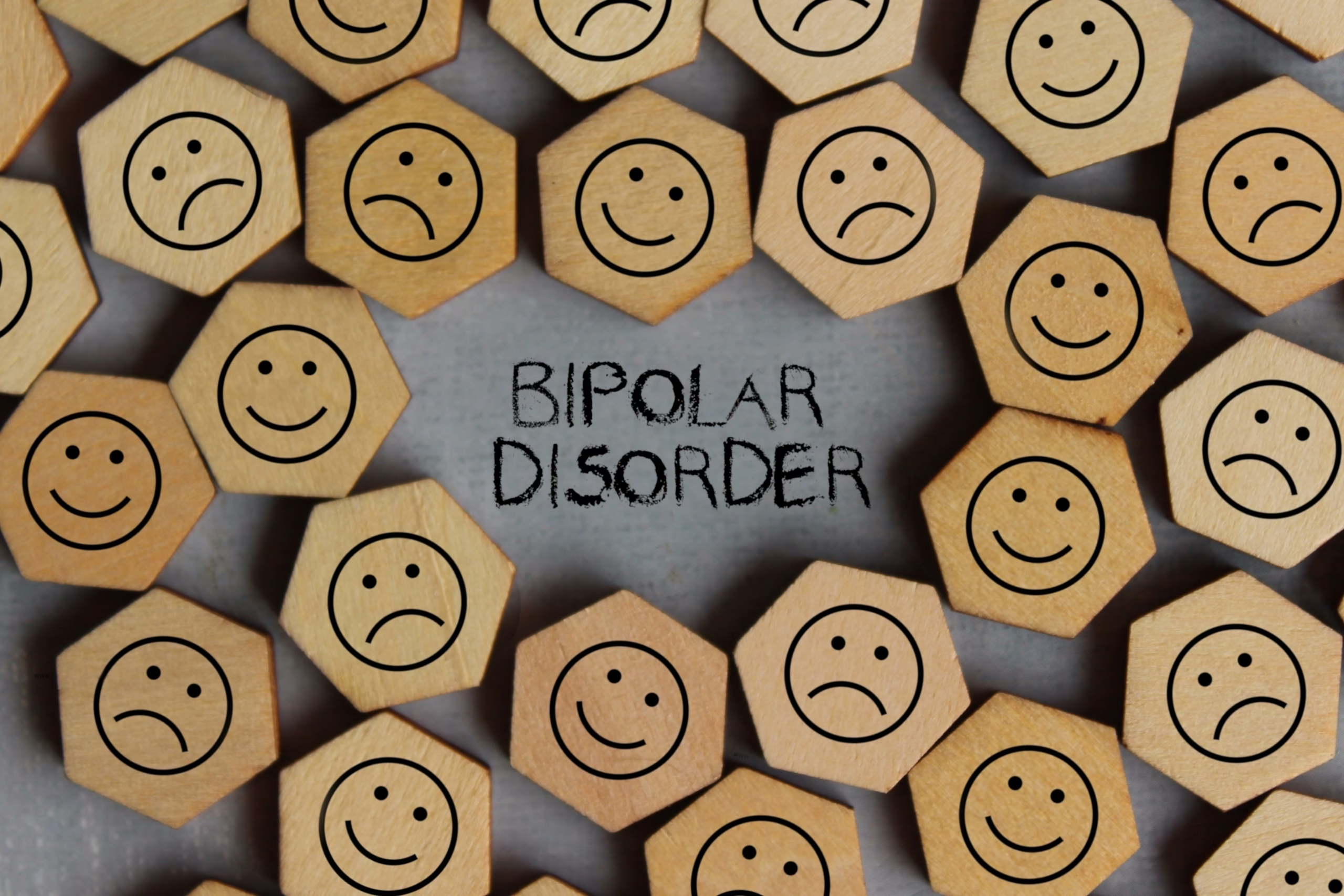
What Is a Bipolar Disorder Test?

A bipolar disorder test is usually a questionnaire that asks whether someone has experienced periods of unusually elevated or irritable mood, decreased need for sleep, increased activity, rapid thoughts, impulsive decisions, or depression. Some tools also ask whether these experiences occurred together and affected everyday functioning.
Despite the name, an online bipolar test does not function like a laboratory test with a definite positive or negative result. It identifies reported experiences that may deserve closer attention but cannot explain their cause or establish a diagnosis.
Why Do People Take an Online Bipolar Test?
People often search for a bipolar disorder test after noticing changes they cannot easily explain. A person may be concerned about alternating periods of exhaustion and energy, recurring depression, impulsive choices, sleep changes, or feedback from loved ones.
The search may also come from wanting certainty. When emotions feel unpredictable, receiving an immediate score can seem reassuring even though the result cannot capture the complete pattern.
Someone might take a test after noticing:
- Periods of needing substantially less sleep than usual.
- Unusually high energy or activity.
- Rapid speech or thoughts that feel difficult to slow.
- Increased confidence that feels different from their usual baseline.
- Irritability that appears alongside greater energy or reduced sleep.
- Impulsive spending, commitments, or risky decisions.
- Recurring periods of depression or emotional withdrawal.
- Noticeable changes observed by friends or family.
- Difficulty understanding why their motivation changes so sharply.
What Can a Bipolar Test Tell You?
A screening result can show that someone endorsed experiences commonly examined when exploring bipolar disorder. It may also give the person useful language for describing changes they previously viewed as unrelated.
The result can serve as a starting point for reflection. Its value comes from encouraging closer attention to patterns—not from delivering a final answer.
A bipolar test may help someone:
- Notice possible connections among mood, sleep, energy, and behavior.
- Remember experiences they had previously minimized.
- Identify concerns they want to discuss in counseling.
- Begin tracking how long changes last.
- Consider whether functioning changes during certain periods.
- Recognize that depression may be only one part of the pattern.
- Prepare specific examples for a conversation about their concerns.
What Can’t a Bipolar Disorder Test Tell You?
An online screening cannot determine why a symptom occurred. Reduced sleep, agitation, racing thoughts, impulsivity, low motivation, or emotional intensity can appear in several different circumstances.
The test also cannot evaluate the person’s complete history or observe changes from their usual behavior. Even a carefully designed questionnaire offers only a limited view of a much larger experience.
An online test cannot reliably determine:
- Whether someone has bipolar disorder.
- Which type of bipolar disorder may apply.
- Whether symptoms belong to one recurring pattern.
- Whether another experience better explains the changes.
- How much the person’s functioning has changed from baseline.
- Whether answers were influenced by a recent difficult period.
- Which form of counseling would fit the person’s needs.
- What a single high or low score means without additional context.
Why a Test Score Is Not a Diagnosis
A score is created by adding together answers to standardized questions. It cannot independently examine timing, context, severity, duration, or whether several symptoms occurred during the same distinct period.
Two people can receive similar scores while having very different experiences. One may report recurring episodes involving sleep, energy, and behavior, while another may endorse isolated symptoms connected to anxiety, ADHD, trauma, stress, or disrupted routines.
What Does Bipolar Disorder Involve?
Bipolar disorder involves distinct changes in mood, energy, activity, and functioning. These patterns can include manic or hypomanic episodes, depressive episodes, or episodes involving a combination of elevated and depressive symptoms.
The experience is more complex than alternating between happiness and sadness. The person’s sleep, thinking, speech, confidence, decisions, relationships, and ability to manage responsibilities may change noticeably during an episode.
Mania, Hypomania, and Depression
Mania involves a marked change in mood and activity that causes substantial disruption or unsafe behavior. Someone may feel unusually energized, powerful, irritable, restless, or driven while having difficulty recognizing the consequences of their actions.
Hypomania involves a noticeable change in mood, energy, and activity but is less severe than mania. It may initially feel productive or positive, which can make it easier to overlook—especially when depression causes more obvious distress.
A depressive episode may involve:
- Persistent sadness, emptiness, or emotional numbness.
- Reduced interest in previously meaningful activities.
- Changes in sleep or appetite.
- Low energy or slowed activity.
- Difficulty concentrating or making decisions.
- Feelings of worthlessness or excessive guilt.
- Hopelessness about the future.
- Thoughts of death, suicide, or self-harm.
Bipolar Mood Episodes vs. Everyday Mood Changes
Everyone experiences emotional reactions to stress, relationships, disappointment, success, fatigue, and changing circumstances. These reactions do not automatically indicate bipolar disorder.
Bipolar mood episodes involve a broader cluster of changes that persist over time and differ from the person’s usual functioning. Looking at mood without considering sleep, energy, activity, behavior, duration, and impact can create an incomplete picture.
| Everyday mood changes | Patterns worth exploring |
|---|---|
| Usually connected to an identifiable event | May extend beyond the immediate situation |
| Emotions change without a major shift in activity | Mood changes occur with noticeable differences in energy or behavior |
| Sleep needs remain relatively consistent | The person may sleep much less without initially feeling tired |
| Judgment remains close to the person’s baseline | Decisions may become unusually impulsive or risky |
| The reaction generally settles as circumstances change | The pattern may continue and interfere with functioning |
Why Depression Can Make the Pattern Harder to Recognize
Depression is often the part of the pattern that motivates someone to seek support. Low energy, hopelessness, loss of interest, and difficulty functioning may feel clearly distressing, while elevated periods may be remembered as times when the person was finally doing well.
Hypomanic experiences can be especially difficult to identify when they involve confidence, productivity, sociability, or creativity. The more useful question is not whether the period felt good, but whether it represented a sustained and noticeable change from the person’s usual baseline.
What Experiences Can Resemble Bipolar Symptoms?

Several experiences can involve irritability, poor concentration, impulsivity, racing thoughts, sleep disruption, emotional shifts, or changes in motivation. Similarity in one symptom does not mean the underlying patterns are the same.
This is one reason a bipolar disorder test should not be interpreted alone. The complete sequence and context matter more than whether someone recognizes one familiar description.
Overlapping experiences may include:
- Anxiety accompanied by racing thoughts or restlessness.
- ADHD-related impulsivity, activity, or difficulty slowing attention.
- Trauma-related hyperarousal, emotional reactivity, or disrupted sleep.
- Depression involving changes in energy and concentration.
- Chronic stress or exhaustion.
- Grief and significant life transitions.
- Irregular sleep schedules.
- Emotional reactions connected to relationship conflict.
- Substance-related changes in mood, sleep, or behavior.
Why Timing Matters More Than One Symptom
A single symptom rarely provides enough information. Sleeping less because of a deadline is different from experiencing a sustained decrease in the need for sleep alongside increased energy, rapid speech, and unusually expansive plans.
It helps to examine whether several changes began together, how long they continued, and what happened afterward. A timeline can reveal relationships that a one-time test score may miss.
Useful questions include:
- When did the change begin?
- How long did it last?
- How much sleep was I getting?
- Did I feel tired despite sleeping less?
- Did my activity or confidence change?
- Did other people notice a difference?
- Did I make decisions that were unusual for me?
- How did the period affect work, relationships, or responsibilities?
- What was my mood and energy like afterward?
- Has a similar pattern happened before?
Can a Bipolar Test Produce a False Positive?

A test may produce an elevated score when someone endorses experiences that overlap with bipolar symptoms but occur for another reason. The questionnaire cannot always determine whether the symptoms happened together as part of a distinct mood episode.
A high score therefore means “look more closely,” not “you have bipolar disorder.” Treating it as confirmation may increase fear or cause someone to interpret every emotional change through one label.
Can a Bipolar Test Miss Meaningful Symptoms?
Yes. Someone may answer “no” because they do not recognize a previous elevated period as unusual, cannot remember its duration, or interpret a question differently than intended.
A person may also minimize behavior that felt productive or enjoyable at the time. Feedback from trusted people and written observations can sometimes reveal changes that were difficult to recognize from inside the experience.
Why Repeated Online Testing May Not Create Clarity
Taking several tests can feel like careful research, but different wording and scoring systems may produce conflicting results. Someone may then continue searching until they find the answer that feels either most reassuring or most frightening.
This cycle can create more uncertainty instead of resolving it. Recording actual experiences and discussing their context is generally more informative than repeatedly comparing scores.
How to Use a Bipolar Disorder Test Responsibly
Treat the result as one piece of information rather than a conclusion. Save the questions or note which experiences stood out, but avoid reorganizing your identity around the score.
Helpful next steps include:
- Write down the date and reason you took the test.
- Record which questions felt most relevant.
- Note specific examples rather than only the final score.
- Track mood, sleep, energy, and activity over time.
- Identify changes from your usual baseline.
- Include both elevated and depressive experiences.
- Consider observations shared by trusted people.
- Bring the information into counseling for further discussion.
Creating a Mood and Energy Timeline
A timeline can show whether changes form recurring episodes or appear mainly in response to particular circumstances. It does not need to be detailed enough to become another source of pressure.
A brief daily record might include:
- General mood.
- Hours of sleep.
- Perceived need for sleep.
- Energy level.
- Activity level.
- Irritability.
- Significant decisions or impulses.
- Ability to manage responsibilities.
- Major stressors or changes.
- Observations from trusted people.
The purpose is to identify patterns, not rate every emotion as normal or abnormal. Tracking should remain manageable and focused on useful context.
How Loved Ones Can Help Identify Changes
Loved ones may notice changes in speech, sleep, plans, confidence, spending, irritability, or social behavior before the person recognizes them. Their perspective can add context, but it should not be used to assign a diagnosis.
A supportive conversation focuses on specific observations rather than labels. For example, “You have slept very little this week and seem much more active than usual” is more useful than “You are acting bipolar.”
Helpful approaches include:
- Describe observable changes calmly.
- Ask how the person has been feeling.
- Listen without arguing about a diagnosis.
- Avoid using bipolar disorder as an insult.
- Take unsafe behavior or suicidal statements seriously.
- Offer support with tracking patterns or seeking counseling.
- Continue checking in after the immediate concern passes.
When Should You Consider Counseling?

Counseling may be helpful when changes in mood, energy, sleep, or activity are confusing, recurring, or affecting daily life. Support may also be worthwhile when an online test result creates fear or when someone cannot tell whether their experiences form a broader pattern.
A person does not need to arrive with a diagnosis. Counseling can begin with what they have observed and how those experiences are affecting their choices, relationships, routines, and sense of stability.
How Counseling Can Help After a Bipolar Test
Counseling can help someone organize a timeline of mood, energy, sleep, behavior, and functioning. A therapist can also explore emotional patterns, recurring stressors, relationship effects, and what the person hopes will change.
The purpose is not to confirm an online score or force every experience into one explanation. Counseling should respond to the individual’s actual needs while supporting awareness, communication, routines, and safer responses to emotional changes.
Counseling may focus on:
- Identifying changes from the person’s usual baseline.
- Exploring when symptoms occur together.
- Recognizing early signs of emotional escalation or withdrawal.
- Developing more consistent sleep and daily routines.
- Understanding how mood changes affect relationships.
- Strengthening communication with trusted people.
- Reducing shame about past behavior.
- Repairing relationships after difficult periods.
- Creating plans for responding to future changes.
- Separating personal worth from a screening result.
Understanding Bipolar Disorder Tests Near Cypress and Houston Willowbrook
People near Cypress may take an online test after noticing changes in mood, sleep, energy, confidence, or decision-making. A score may provide language for those concerns, but it cannot explain the complete pattern or determine what kind of support would be most appropriate.
Acceptance Path Counseling offers bipolar disorder counseling in Houston Willowbrook for adults who want to examine emotional patterns without being reduced to a test result. Counseling can provide a private setting to explore concerns, strengthen routines, improve communication, and identify practical next steps.
Conclusion
A bipolar disorder test can help someone notice possible patterns involving mood, energy, sleep, activity, impulsivity, and depression. It cannot diagnose bipolar disorder, determine the cause of those experiences, or replace a fuller understanding of how they developed over time.
People near Cypress can explore these concerns through bipolar disorder counseling in Houston Willowbrook. Therapy can help turn a confusing test result into a clearer conversation about patterns, needs, relationships, and meaningful next steps.
FAQs
Is counseling available near Cypress after taking a bipolar disorder test?
Yes. Acceptance Path Counseling provides bipolar disorder counseling for people near Cypress and throughout Houston Willowbrook. Therapy may help someone explore changes in mood, energy, sleep, activity, impulsivity, and daily functioning without treating an online score as a diagnosis.
Can Cypress residents attend online counseling for mood-related concerns?
Online counseling may be available when the therapist is licensed in Texas. Virtual sessions can provide flexibility for people balancing work, transportation, school, caregiving, relationships, or family responsibilities.
How can a therapist near Houston Willowbrook help after an online bipolar test?
A therapist can help someone organize a timeline, identify changes from their usual baseline, and examine how mood, sleep, energy, and behavior affect one another. Counseling may also support routines, communication, emotional awareness, and planning for recurring changes.
Can an online bipolar disorder test diagnose me?
No. An online bipolar disorder test can identify reported experiences associated with bipolar symptoms, but it cannot establish a diagnosis. Its results should be treated as preliminary information rather than confirmation.
What should I do if my bipolar test score is high?
Record which questions felt relevant and consider the broader pattern, including timing, duration, sleep, energy, behavior, and functioning. Counseling can help you examine those observations without assuming that the score has only one possible explanation.