
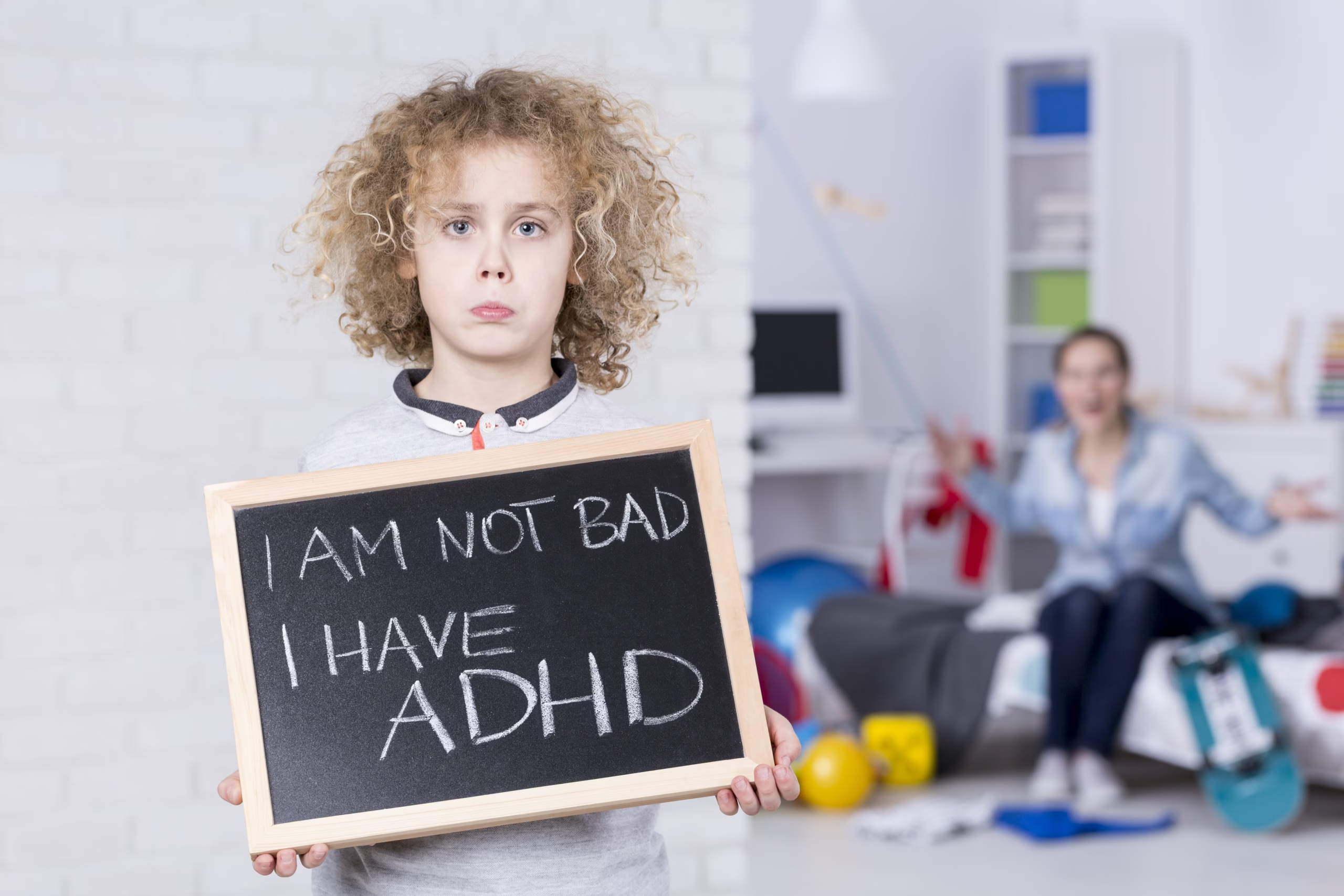
What Are ADHD Symptoms in Kids?

ADHD involves persistent patterns of inattention, hyperactivity, impulsivity, or a combination of these experiences. The pattern may affect a child’s responsibilities, learning, friendships, routines, or confidence.
Every child becomes distracted, energetic, impatient, or forgetful sometimes. ADHD-related concerns become more noticeable when the behaviors recur, create meaningful difficulty, and appear inconsistent with what the child can manage independently.
ADHD Is More Than Being Distracted or Energetic
A child who enjoys moving, talking, or exploring does not necessarily have ADHD. Temperament, age, stress, sleep, learning demands, and the environment can all influence behavior.
Similarly, a child who can focus intensely on a favorite activity may still struggle with attention elsewhere. Attention is not simply present or absent; it can change depending on interest, structure, urgency, stimulation, and emotional demands.
Three Ways ADHD Symptoms May Present
ADHD symptoms are generally grouped into three presentations: predominantly inattentive, predominantly hyperactive-impulsive, and combined. A child’s presentation can also change as they grow and encounter different expectations.
- Predominantly inattentive: The child primarily struggles with sustained attention, organization, following directions, or remembering everyday responsibilities.
- Predominantly hyperactive-impulsive: The child primarily struggles with restlessness, waiting, interrupting, or slowing down before acting.
- Combined: The child experiences a meaningful combination of inattentive and hyperactive-impulsive symptoms.
These categories describe symptom patterns. They do not describe the child’s personality, intelligence, potential, or worth.
Inattentive ADHD Symptoms in Kids
Inattentive symptoms can be easy to overlook because they may not disrupt other people. A child might appear quiet or cooperative while privately struggling to follow what is happening.
Possible signs include:
- Frequently losing assignments, supplies, or personal belongings.
- Beginning tasks but leaving them unfinished.
- Missing important details in instructions.
- Appearing not to hear when spoken to directly.
- Forgetting everyday responsibilities.
- Becoming distracted by sounds, movement, or unrelated thoughts.
- Struggling to organize schoolwork or personal belongings.
- Avoiding tasks that require sustained mental effort.
- Making preventable mistakes despite understanding the material.
- Daydreaming during conversations or lessons.
The child may understand what they are supposed to do but have difficulty keeping the steps active long enough to complete them.
Hyperactive and Impulsive ADHD Symptoms in Kids
Hyperactive and impulsive symptoms are often more visible. However, they can still be misunderstood as deliberate disobedience, poor discipline, or a desire for attention.
Possible signs include:
- Fidgeting or moving frequently while seated.
- Leaving a seat when remaining seated is expected.
- Talking considerably or struggling to play quietly.
- Interrupting conversations or answering before a question is finished.
- Finding it difficult to wait for a turn.
- Grabbing objects or entering activities without asking.
- Acting before considering what could happen.
- Moving quickly from one activity to another.
- Appearing constantly driven to do something.
- Becoming restless during meals, homework, or other quiet routines.
The child may recognize the problem immediately afterward. That awareness does not always create enough pause to prevent the impulsive action in the moment.
What ADHD Symptoms Can Look Like at Home
At home, ADHD symptoms may become most noticeable during routines requiring several steps. Getting ready for school, completing chores, preparing for bed, or leaving the house can become recurring sources of tension.
A child might put on one shoe, notice a toy, begin playing, and forget that everyone is waiting. The unfinished routine may reflect difficulty maintaining the sequence rather than an intentional refusal to cooperate.
Parents may notice:
- Repeated reminders are needed for familiar responsibilities.
- Morning and bedtime routines take longer than expected.
- Personal belongings are frequently misplaced.
- The child becomes overwhelmed by multi-step instructions.
- Chores are started but not completed.
- Transitions lead to frustration or resistance.
- Homework requires substantial supervision.
- The child reacts strongly after repeated correction.
These patterns can leave both the child and family feeling discouraged. Understanding where the routine breaks down provides more useful information than simply increasing the number of reminders.
What ADHD Symptoms Can Look Like at School

The structure of a classroom can reveal attention and impulse-control difficulties that are less apparent during preferred activities. A child may understand the lesson while struggling to demonstrate that understanding consistently.
Possible school-related patterns include:
- Forgetting to submit completed assignments.
- Losing worksheets, books, or supplies.
- Missing directions while appearing attentive.
- Making rushed mistakes.
- Struggling to begin independent work.
- Talking or moving during quiet activities.
- Completing preferred assignments but avoiding repetitive tasks.
- Interrupting classmates.
- Needing frequent redirection.
- Becoming discouraged when work accumulates.
School difficulties should not automatically be interpreted as a lack of ability. The child may know the material but struggle with starting, organizing, completing, or submitting the work.
Can ADHD Symptoms Be Easy to Miss?

Yes. Children with quieter inattentive patterns may receive less attention because they are not disrupting the classroom or creating obvious conflict.
A child might stare at the page, copy what others are doing, or depend on last-minute effort to conceal confusion. The difficulty may become visible only when expectations increase and previous compensation strategies no longer work.
Some children also become skilled at hiding forgetfulness or uncertainty because they fear correction. What looks like independence may require considerable private stress.
ADHD Symptoms in Girls
Girls can experience any ADHD presentation, but inattentive difficulties may be less likely to attract immediate attention. A girl may be described as dreamy, disorganized, overly talkative, emotionally sensitive, or inconsistent rather than recognized as struggling with attention regulation.
These tendencies should not become another stereotype. The important question is how the individual child experiences attention, organization, impulses, relationships, and daily expectations.
ADHD and Emotional Regulation
Emotional regulation difficulties are not the same as the core attention and impulse-control symptoms. However, some children with ADHD may become frustrated quickly, struggle to shift away from disappointment, or react strongly when demands accumulate.
The final event may appear minor while representing the visible end of a much longer buildup. Hunger, fatigue, repeated correction, transitions, sensory input, and unfinished demands can all add pressure.
Possible patterns include:
- Becoming intensely upset after making a mistake.
- Taking longer than expected to settle after conflict.
- Reacting strongly to interrupted activities.
- Feeling overwhelmed by several instructions at once.
- Becoming discouraged after repeated reminders.
- Expressing shame about being “the difficult kid.”
- Withdrawing after an impulsive mistake.
- Expecting failure before beginning a challenging task.
Responding only to the final reaction can miss what happened earlier. Looking at the buildup may reveal more practical opportunities for support.
ADHD Symptoms vs. Age-Appropriate Behavior
Children naturally have developing attention spans, emotional skills, and impulse control. The difference is rarely determined by whether a behavior happens at all.
| Age-appropriate behavior | Pattern worth examining |
|---|---|
| Occasionally forgetting an assignment | Frequently losing or forgetting work despite repeated support |
| Becoming restless during a long activity | Regularly struggling to remain engaged during ordinary expectations |
| Interrupting when excited | Repeatedly interrupting across conversations and activities |
| Resisting an unpleasant chore | Consistently being unable to begin or complete familiar routines |
| Becoming upset after disappointment | Experiencing intense, recurring reactions that disrupt daily life |
| Losing track of belongings sometimes | Misplacing necessary items so often that school or home routines suffer |
The child’s age, environment, expectations, and overall pattern all provide important context.
Why Patterns Matter More Than One Symptom
One behavior cannot explain a child’s complete experience. Trouble concentrating could be related to stress, worry, sleep, learning demands, an overstimulating environment, or many other circumstances.
Families can learn more by noticing when the behavior occurs, how frequently it happens, and what support changes it. Comparing patterns across home, school, activities, and relationships can also reveal where the child functions more comfortably.
Helpful questions include:
- Does this happen during preferred and nonpreferred activities?
- Which instructions are most difficult to follow?
- Does visual information help more than spoken reminders?
- Are transitions harder when the child is tired or rushed?
- Does the child understand the task but struggle to begin?
- What happens immediately before frustration increases?
- Which environments make organization easier?
- How does the child describe the experience?
The goal is not to collect evidence against the child. It is to understand what the child may be having difficulty communicating.
How ADHD Can Affect Confidence
Repeated reminders can gradually change how a child views themselves. They may begin to believe that forgetting, interrupting, or struggling to finish work means they are lazy, careless, or disappointing.
A child who expects criticism may avoid tasks, hide mistakes, or say they do not care. That response can protect them temporarily from admitting how discouraged they feel.
Supportive language separates the difficulty from the child’s identity:
- “This routine has several steps. Let’s make them easier to see.”
- “You lost track of what came next. That does not mean you were not trying.”
- “We can address what happened without deciding that you are a bad kid.”
- “Let’s notice where the assignment became difficult.”
- “You are responsible for repairing the mistake, and you do not have to handle it alone.”
Compassion does not remove expectations. It makes it easier to teach skills without turning every difficulty into a judgment about character.
How ADHD Can Affect Friendships

Impulsivity, missed social cues, interrupting, or emotional reactions can affect peer relationships. A child may want connection while unintentionally creating frustration or misunderstanding.
Some children dominate games, struggle to wait, or change the rules when excitement takes over. Others withdraw because they worry about making another social mistake.
Counseling can help children notice interaction patterns and practice clearer communication. Families can also reinforce that relationship skills develop through practice rather than shame.
Why Homework Can Become a Daily Conflict
Homework requires more than knowing the material. A child must remember the assignment, bring home the correct items, begin without classroom structure, sustain attention, manage frustration, and submit the finished work later.
Difficulty at any point can prevent completion. Telling the child to “focus” may not identify which part of that sequence needs support.
Families can look for the specific obstacle:
- Was the assignment recorded?
- Did the necessary materials come home?
- Does the child understand the first step?
- Is the task too visually or mentally overwhelming?
- Would a short work period feel more manageable?
- Is the child depleted after maintaining control throughout school?
This approach turns homework from a test of willpower into a routine that can be observed and adjusted.
Practical Ways Parents Can Respond
The goal is not to eliminate every distraction or create a rigid household. Helpful strategies make expectations easier to see, begin, and complete.
Parents might try:
- Give one direction at a time: Pause before adding the next step.
- Use visible routines: A short checklist can reduce dependence on repeated verbal reminders.
- Prepare for transitions: Give advance notice and identify what the child should do next.
- Break tasks into smaller parts: “Put the clothes in the basket” may feel more manageable than “clean your room.”
- Create realistic time buffers: Allow additional time for routines involving several transitions.
- Reduce unnecessary distractions: Adjust the environment during homework or preparation.
- Notice effort specifically: Describe what the child did rather than offering only general praise.
- Repair after conflict: Revisit what happened once everyone is calmer.
- Stay curious about inconsistency: Ask what made one day easier instead of assuming the child simply tried harder.
Not every strategy will fit every child. A useful routine is one the family can sustain without requiring constant pressure.
How to Talk With Your Child
Begin with observations rather than labels. A child may speak more openly when the conversation focuses on their experience instead of what adults believe is wrong.
You might say:
- “I notice it is hard to remember several directions at once.”
- “Homework seems to take a lot of energy lately.”
- “You looked upset after being reminded again.”
- “What part of getting ready feels hardest?”
- “What helps you know what comes next?”
- “We want to understand this with you.”
Children often already know they are having difficulty. The conversation should help them feel understood without making ADHD their entire identity.
When Should a Family Consider Counseling?
Counseling may be helpful when attention, impulsivity, restlessness, organization, or emotional reactions repeatedly affect daily life. Families may also consider support when routines have become dominated by correction, frustration, or arguments.
A child does not need to display every possible ADHD symptom. Counseling can help families examine the pattern, strengthen communication, and decide which routines or emotional skills deserve attention.
How Counseling Can Help With ADHD Symptoms in Kids
Counseling can help a child and family understand how attention-related difficulties affect emotions, routines, confidence, and relationships. The process should reflect the child’s age, strengths, needs, and family environment.
Counseling may focus on:
- Understanding the situations in which difficulties appear.
- Developing realistic routines.
- Breaking responsibilities into manageable steps.
- Practicing emotional-regulation skills.
- Reducing shame after mistakes.
- Strengthening parent-child communication.
- Improving problem-solving and relationship repair.
- Supporting organization and task initiation.
- Helping parents respond consistently.
- Recognizing the child’s strengths without minimizing their difficulties.
For younger children, counseling often includes active family participation. Parents can practice clearer instructions, positive reinforcement, predictable expectations, and supportive responses that fit their child’s needs between sessions.
Understanding ADHD Symptoms in Kids Near Greenwood Forest and Houston Willowbrook
Families near Greenwood Forest may balance school schedules, homework, activities, commuting, and household responsibilities throughout Houston Willowbrook. Attention-related difficulties can become especially noticeable when a child must move quickly between these demands.
Acceptance Path Counseling offers ADHD counseling in Houston Willowbrook for families who want to understand recurring patterns without reducing a child to disruptive behavior or school performance. Counseling can support more manageable routines, clearer communication, and less shame around everyday difficulties.
Conclusion
Recognizing ADHD symptoms in kids requires looking beyond isolated distraction or high energy. Recurring patterns involving attention, organization, impulses, transitions, relationships, and confidence offer more useful context.
Families near Greenwood Forest can explore these concerns through ADHD counseling in Houston Willowbrook. Counseling can help parents and children understand what is happening and build practical responses that fit their everyday lives.
FAQs
Is ADHD counseling available near Greenwood Forest?
Yes. Acceptance Path Counseling provides ADHD counseling for families near Greenwood Forest and throughout Houston Willowbrook. Therapy may help when attention, impulsivity, organization, emotional reactions, or recurring family conflict affects daily life.
Can Greenwood Forest families attend online counseling for childhood ADHD concerns?
Online counseling may be available when the therapist is licensed in Texas. Virtual sessions can offer flexibility for families balancing school, transportation, activities, work, and household responsibilities.
How can a therapist near Houston Willowbrook help families understand ADHD symptoms in kids?
A therapist can help families examine where difficulties occur, what tends to happen beforehand, and which responses make routines more manageable. Counseling may also support emotional skills, communication, confidence, and practical family strategies.
Does being energetic mean a child has ADHD?
No. Many children are naturally active, enthusiastic, or restless at times. ADHD involves a broader and more persistent pattern that affects important areas of the child’s daily life.
Can ADHD symptoms look different at home and school?
Yes. Structure, interest, stimulation, expectations, and available support can influence how a child functions. Comparing patterns across settings may help families understand which demands are especially difficult.