
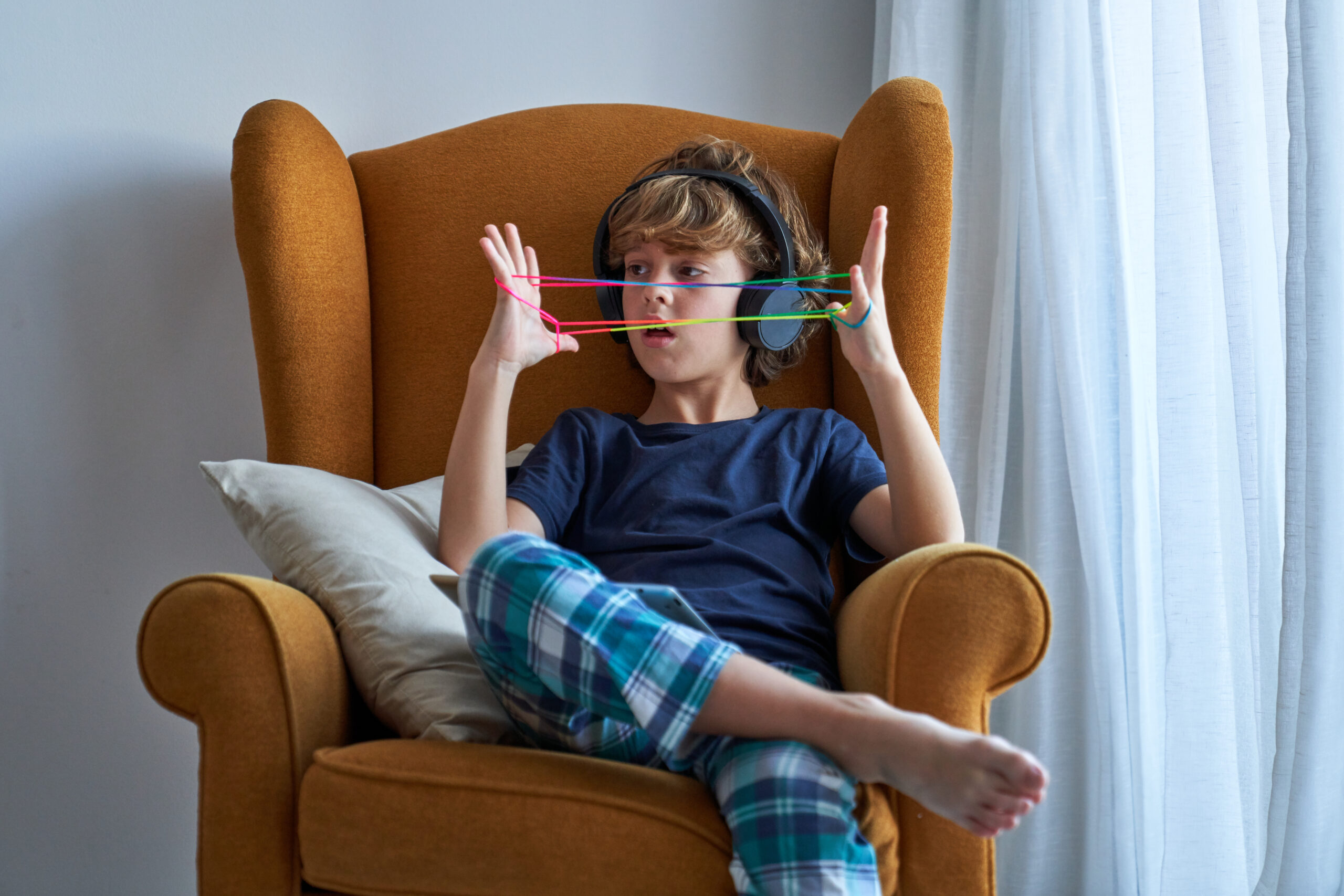
What Is ADHD Overstimulation?

ADHD overstimulation occurs when incoming information and demands exceed what someone can comfortably process at that moment. The experience may involve sounds, lights, movement, conversations, thoughts, emotions, time pressure, or the need to switch rapidly between tasks.
The term is commonly used to describe an experience rather than a formal ADHD symptom or diagnosis. Someone can have ADHD without frequently feeling overstimulated, and people without ADHD can also experience overload.
Why Can ADHD Make Overstimulation More Likely?
ADHD can involve difficulty directing attention, resisting distraction, shifting between tasks, and organizing competing information. When several inputs demand attention at once, deciding what matters and what can be ignored may require considerable effort.
This does not necessarily mean the senses are unusually strong or that the brain simply “cannot filter anything.” Research suggests that attention and sensory processing differences can be complex and influenced by the type of input, environment, and individual experience. NIMH overview of ADHD
Factors that may contribute include:
- Competing attention demands: Several sounds, movements, or conversations may feel equally urgent.
- Difficulty shifting focus: An interruption may make it hard to return to the original activity.
- Working-memory demands: Holding instructions in mind becomes harder when additional information keeps arriving.
- Internal restlessness: Racing thoughts or the need for movement may add to what is happening externally.
- Emotional intensity: Frustration, criticism, and unexpected changes may consume attention quickly.
- Task accumulation: Multiple unfinished responsibilities can remain mentally active at the same time.
- Reduced recovery: Fatigue, hunger, stress, or insufficient quiet time may lower the amount of input someone can manage.
What Does ADHD Overstimulation Feel Like?

Overstimulation can feel like every sound, thought, and request is arriving at the same volume. Someone may understand that each demand is manageable separately while feeling unable to organize them together.
The experience may be physical, cognitive, emotional, or behavioral. It can also shift quickly depending on the setting and how much strain has already accumulated.
Someone may describe:
- “I cannot hear what you are saying because everything else is too loud.”
- “Every request feels urgent, and I do not know where to begin.”
- “I need everyone to stop talking for a minute.”
- “My thoughts are moving, but I cannot form a clear sentence.”
- “I feel trapped even though nothing dangerous is happening.”
- “One more interruption feels impossible.”
- “I need to leave before I say something I regret.”
Common Signs of ADHD Overstimulation
The signs of overload do not always look like visible panic or distress. Someone may become unusually quiet, irritable, forgetful, restless, or unable to make a simple decision.
A single reaction cannot establish that overstimulation is occurring. Patterns involving the environment, accumulated demands, and what helps the person recover provide more useful information.
Possible signs include:
- Irritability: Ordinary questions or sounds may begin feeling unusually intrusive.
- Mental fog: The person may struggle to retrieve words, follow instructions, or make decisions.
- Restlessness: Sitting still may become uncomfortable as internal tension increases.
- Difficulty speaking: Someone may know what they want to say but feel unable to organize the words.
- Heightened sensitivity: Sounds, lights, textures, or movement may become harder to tolerate.
- Withdrawal: The person may stop responding or move away from interaction.
- Emotional escalation: Frustration, tearfulness, or anger may rise more quickly than expected.
- Impulsive reactions: Someone may speak sharply, abandon a task, or leave abruptly.
- Physical tension: Tight muscles, headaches, jaw clenching, or shallow breathing may appear.
- Exhaustion: The person may need substantial recovery time after the environment becomes quieter.
Sensory Overstimulation
Sensory overload may develop when sounds, lights, movement, smells, textures, or physical contact compete for attention. A crowded room with music, conversation, bright lighting, and constant movement can become difficult even when each element is tolerable on its own.
Sensory responses vary considerably, and sensory sensitivity is not exclusive to ADHD. Research has identified connections between ADHD traits and some sensory-processing differences, but those connections should not be used to interpret every uncomfortable sensory experience as ADHD. Research on ADHD and sensory processing
Sensory triggers may include:
- Several people speaking at the same time.
- Repetitive background noises that are difficult to ignore.
- Bright, flickering, or fluorescent lighting.
- Crowded spaces with continuous movement.
- Strong smells or competing scents.
- Uncomfortable clothing or unexpected touch.
- Notifications, screens, and visual clutter.
- Rapid movement between environments with different sensory demands.
Cognitive Overstimulation
Not all overstimulation comes from the physical environment. Competing thoughts, reminders, decisions, unfinished responsibilities, and rapidly changing priorities can create significant internal overload.
Someone may appear inactive while mentally trying to track many open tasks at once. When everything remains active in working memory, even a small additional request may feel disproportionately difficult.
Cognitive overload may involve:
- Remembering several instructions at once.
- Switching repeatedly between tasks.
- Managing frequent notifications and messages.
- Making many small decisions without a break.
- Keeping track of unfinished responsibilities.
- Trying to prioritize tasks that all feel urgent.
- Processing detailed information during a fast conversation.
- Returning to work after repeated interruptions.
Emotional Overstimulation
Emotional input can also become overwhelming, particularly when someone is already tired or managing several demands. Criticism, conflict, disappointment, uncertainty, and concern about other people’s reactions may compete for limited attention.
The resulting response may look stronger than the immediate event seems to warrant. The reaction often reflects the current event plus everything the person was already trying to manage.
Emotional overload may involve:
- Feeling flooded during disagreement.
- Becoming tearful after a small mistake.
- Interpreting one more request as unbearable pressure.
- Needing time before discussing criticism.
- Feeling responsible for everyone’s emotional state.
- Struggling to shift attention away from an upsetting interaction.
- Withdrawing because conversation requires too much processing.
- Reacting quickly and regretting the response later.
Social Overstimulation
Social settings require attention to words, tone, facial expressions, timing, background activity, and expectations. Group conversations can become especially demanding when several people speak, topics change rapidly, or the person is trying not to interrupt.
Someone may enjoy being with others and still become socially overstimulated. Needing quiet after an event does not necessarily mean the person disliked the interaction or the people involved.
Social overload may look like:
- Losing track of a group conversation.
- Becoming unusually quiet as the event continues.
- Interrupting because holding a thought becomes difficult.
- Feeling irritated by questions after prolonged interaction.
- Rehearsing responses instead of following the conversation.
- Leaving early without knowing how to explain the need.
- Needing extended solitude afterward.
- Avoiding future events because recovery takes too much energy.
Why Overstimulation Can Seem Sudden
Overstimulation often develops through accumulation rather than one dramatic trigger. A noisy room may be manageable early in the day but become difficult after poor sleep, several interruptions, unresolved stress, and a demanding schedule.
The final trigger may be minor, which can make the response confusing to everyone involved. The person may be reacting to the full load rather than only the last sound, request, or inconvenience.
The buildup may look like this:
- Demands accumulate: Noise, tasks, conversations, decisions, and emotions require continuous attention.
- Recovery is postponed: The person keeps functioning without reducing input or taking a pause.
- Prioritizing becomes harder: More information begins feeling equally urgent.
- Tension increases: Irritability, restlessness, physical discomfort, or mental fog develops.
- One more demand arrives: A small interruption exceeds the person’s remaining capacity.
- The response becomes visible: The person may withdraw, become upset, leave, or lose the ability to communicate clearly.
- Exhaustion follows: Once the environment settles, the person may feel depleted or ashamed.
Overstimulation, Meltdowns, and Shutdowns
Some people use meltdown to describe an outward release of accumulated overload. This may involve crying, anger, rapid speech, pacing, or an urgent need to escape the situation.
A shutdown may look quieter and involve reduced speech, withdrawal, mental blankness, or difficulty responding. These are informal descriptions, and neither reaction should be assumed to have one cause without understanding the broader pattern.
ADHD Overstimulation vs. Anxiety
ADHD-related overload and anxiety can both involve restlessness, muscle tension, irritability, racing thoughts, and difficulty concentrating. Anxiety often centers on perceived threat or feared outcomes, while overstimulation may arise primarily from the amount of input requiring processing.
The distinction is not always clear because the experiences can influence one another. Overload may trigger anxiety, and anxiety may reduce someone’s ability to manage noise, uncertainty, or competing demands.
| ADHD overstimulation | Anxiety-related activation |
|---|---|
| Several inputs compete for attention. | Attention becomes focused on possible danger or an unwanted outcome. |
| Reducing noise or demands may bring relief. | Fear may continue even after the environment becomes quieter. |
| Mental organization becomes difficult. | Thinking may repeatedly return to a feared possibility. |
| Irritability may follow repeated interruption. | Irritability may reflect ongoing worry or tension. |
| The experience often reflects accumulated input. | The experience often reflects anticipation, uncertainty, or threat. |
ADHD Overstimulation vs. ADHD Masking
Overstimulation describes becoming overwhelmed by incoming or internal demands. ADHD masking describes hiding, suppressing, or compensating for ADHD-related experiences to avoid criticism or appear more socially acceptable.
The patterns can occur together when someone conceals growing overload until they reach a private setting. What appears to be a sudden reaction at home may follow hours of masking discomfort elsewhere.
Why Shame Can Follow Overstimulation
After the intensity decreases, someone may judge themselves for becoming irritable, leaving, crying, or needing quiet. They may compare the reaction with how easily other people seemed to manage the same environment.
Shame can discourage the person from discussing what happened or planning differently next time. A more useful response is to examine the buildup without excusing harmful behavior or treating overload as a character flaw.
Common thoughts may include:
- “I should have been able to handle that.”
- “Everyone else seemed fine.”
- “I ruined the experience.”
- “I was being too sensitive.”
- “I should not need this much recovery time.”
- “People will think I am difficult.”
- “I need to hide it better next time.”
Recognizing Early Warning Signs

Early signs may be subtle and easier to address than full overload. Someone might notice that reading becomes harder, background sounds feel louder, patience decreases, or their body begins to tense.
Recognizing these signals is a skill rather than an automatic ability. The goal is to respond earlier, not criticize oneself for failing to notice every episode.
Early signs may include:
- Rereading the same sentence repeatedly.
- Losing track of a familiar task.
- Feeling increasingly sensitive to conversation or noise.
- Becoming more physically restless.
- Clenching the jaw or raising the shoulders.
- Struggling to answer simple questions.
- Feeling an urgent need to finish everything immediately.
- Becoming unusually quiet or short with others.
- Finding ordinary decisions increasingly difficult.
Practical Ways to Reduce ADHD Overstimulation
Helpful strategies usually reduce or organize input rather than demanding greater concentration in an already overloaded state. The most useful response depends on whether the primary strain involves sensory input, decisions, social interaction, emotions, or unfinished tasks.
Begin with one recurring situation instead of trying to control every environment. A small adjustment that can be maintained is more useful than an elaborate routine that creates additional pressure.
Strategies may include:
- Reduce one source of input: Lower background sound, silence notifications, or move away from unnecessary movement.
- Externalize unfinished tasks: Write them in one trusted place so they do not all need to remain mentally active.
- Use one-step instructions: Focus on the next visible action instead of the entire responsibility.
- Create transition space: Leave time between demanding activities so one experience does not flow directly into the next.
- Communicate before overload peaks: Say, “I need a few quiet minutes before I can continue this conversation.”
- Limit simultaneous media: Avoid combining television, scrolling, messages, and conversation when attention is already strained.
- Reduce unnecessary decisions: Prepare repeatable routines for responsibilities that occur frequently.
- Use supportive movement: Walking, stretching, or changing position may help release restlessness.
- Plan recovery: Include quiet or lower-demand time after environments that reliably require substantial processing.
What to Do During Overstimulation

During overload, detailed explanations and complex problem-solving may be difficult. The immediate goal can be reducing input and creating enough space for the person to regain access to language, attention, and choice.
Trying to force instant calm may add another demand. A more helpful response is to reduce incoming demands and make the environment easier to manage before returning to complicated conversations.
Consider these steps:
- Pause incoming questions when possible.
- Move to a quieter or less visually busy space.
- Reduce notifications, music, or competing conversation.
- Name the experience without judgment.
- Focus on one next action rather than several decisions.
- Use brief and direct communication.
- Allow time before revisiting conflict or complicated plans.
- Notice physical tension without demanding immediate relaxation.
Recovering After Overstimulation
Recovery may involve more than a few quiet minutes, especially after prolonged sensory, cognitive, or social demands. Someone may need reduced conversation, food, movement, rest, or an activity that feels predictable.
Recovery is not evidence that the person is avoiding responsibility. It can help restore enough capacity to return to responsibilities with greater attention and flexibility.
Supportive recovery might include:
- Spending time in a quieter environment.
- Eating or drinking after needs were overlooked.
- Taking a shower or changing uncomfortable clothing.
- Engaging in predictable movement.
- Completing a familiar, low-demand activity.
- Postponing optional decisions.
- Writing down unfinished tasks for later.
- Reflecting only after the intensity has decreased.
How to Support Someone Who Is Overstimulated
Avoid asking many questions or demanding a detailed explanation while the person is struggling to process input. Brief communication and a calmer environment may be more useful than immediate problem-solving.
Support should not remove the person’s choices or assume the same strategy always works. Ask about preferences during a calm period so future responses can be collaborative.
Helpful approaches include:
- Reduce competing sounds or conversations.
- Ask one question at a time.
- Offer choices without presenting a long list.
- Avoid interpreting reduced speech as intentional disrespect.
- Give the person time to respond.
- Save complicated discussions for a calmer moment.
- Respect a request for temporary space.
- Reconnect after the person has had time to recover.
When Should You Consider Counseling?
Counseling may be helpful when overstimulation frequently affects relationships, work, school, household responsibilities, or participation in meaningful activities. Support may also be worthwhile when someone spends significant energy avoiding environments because they fear becoming overwhelmed.
A person does not need to eliminate every difficult environment before therapy can be useful. Counseling can help identify patterns and build responses that respect both practical responsibilities and personal limits.
How Counseling Can Help With ADHD Overstimulation
Counseling can help someone identify which combinations of sensory input, cognitive demands, emotions, and interruptions tend to create overload. A therapist can also help examine the shame, conflict, or avoidance that sometimes develops around these experiences.
The goal is not to make someone tolerate unlimited stimulation or control every reaction perfectly. Therapy can support earlier recognition, clearer communication, sustainable routines, and more flexible recovery.
Counseling may focus on:
- Identifying personal triggers and early warning signs.
- Understanding how demands accumulate throughout the day.
- Developing strategies for transitions and interruptions.
- Communicating the need for time or reduced input.
- Addressing shame after overstimulation.
- Creating realistic routines that include recovery.
- Reducing avoidable environmental demands.
- Responding differently to emotional escalation.
- Repairing relationship strain after difficult moments.
- Reconnecting with valued activities gradually.
Understanding ADHD Overstimulation Near Prestonwood Forest and Houston Willowbrook
People near Prestonwood Forest may balance commuting, work, school schedules, caregiving, errands, and busy environments throughout Houston Willowbrook. Noise, traffic, notifications, family conversations, and unfinished responsibilities can accumulate even when each demand appears manageable by itself.
Acceptance Path Counseling offers ADHD therapy in Houston Willowbrook for people who want to understand why certain combinations of input become overwhelming. Counseling can help develop practical responses without treating sensitivity, recovery needs, or emotional strain as personal failures.
Conclusion
Understanding ADHD overstimulation means looking at the total amount of sensory, cognitive, emotional, and social input someone is managing. A reaction that looks sudden may be the visible end of a buildup that began much earlier.
People near Prestonwood Forest can explore these patterns through ADHD counseling when overload begins shaping relationships, responsibilities, or meaningful choices. Counseling can support earlier recognition, clearer communication, and routines that leave more room for recovery.
FAQs
Is counseling for ADHD overstimulation available near Prestonwood Forest?
Yes. Acceptance Path Counseling provides ADHD counseling for people near Prestonwood Forest and throughout Houston Willowbrook. Therapy may help when sensory overload, interruptions, emotional escalation, or difficulty organizing competing demands begins affecting daily life.
Can Prestonwood Forest residents attend online counseling for ADHD overstimulation?
Online counseling may be available to Prestonwood Forest residents when the therapist is licensed in Texas. Virtual sessions can provide flexibility for people balancing work, school, transportation, caregiving, or household responsibilities. Some people also appreciate attending counseling from an environment where sensory input can be adjusted more easily.
How can a therapist near Houston Willowbrook help with ADHD overstimulation?
A therapist can help someone identify personal triggers, early warning signs, recovery needs, and patterns of accumulated demand. Counseling may also support clearer communication, more manageable routines, reduced shame, and practical changes to overstimulating situations.
Is ADHD overstimulation a formal diagnosis?
No. ADHD overstimulation is an informal phrase used to describe becoming overwhelmed by sensory, cognitive, emotional, or social input. It is not a separate ADHD diagnosis, and the experience can also occur for reasons unrelated to ADHD.
How can I tell whether I am becoming overstimulated?
Early signs may include irritability, mental fog, physical tension, restlessness, difficulty speaking, or increased sensitivity to sounds and interruptions. Tracking what happened before the reaction can help reveal whether certain environments or combinations of demands appear repeatedly. Counseling can help someone examine those patterns without relying on one symptom or isolated experience.